Blog

  • Cutest Chick Contest 2024

    Cutest Chick Contest 2024

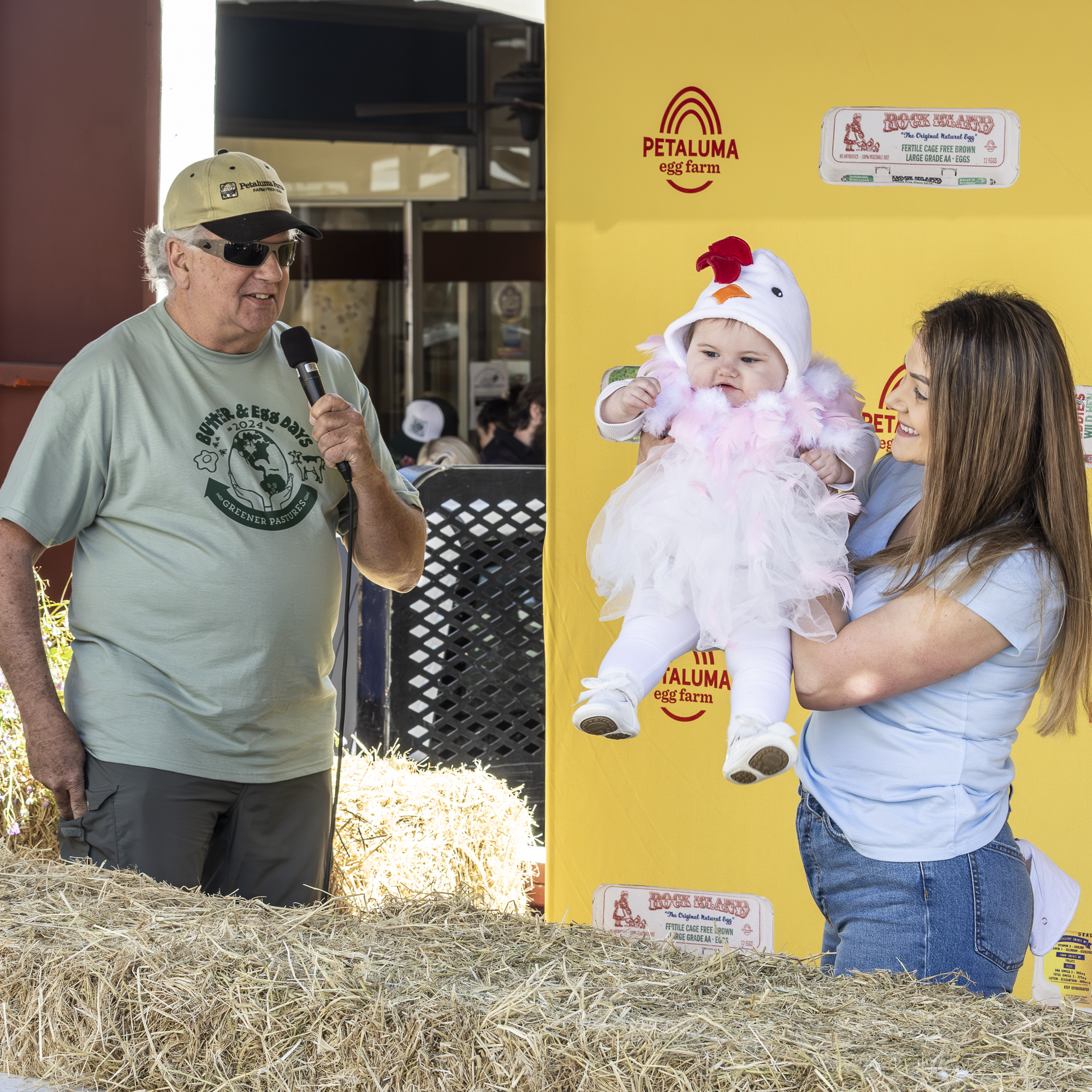
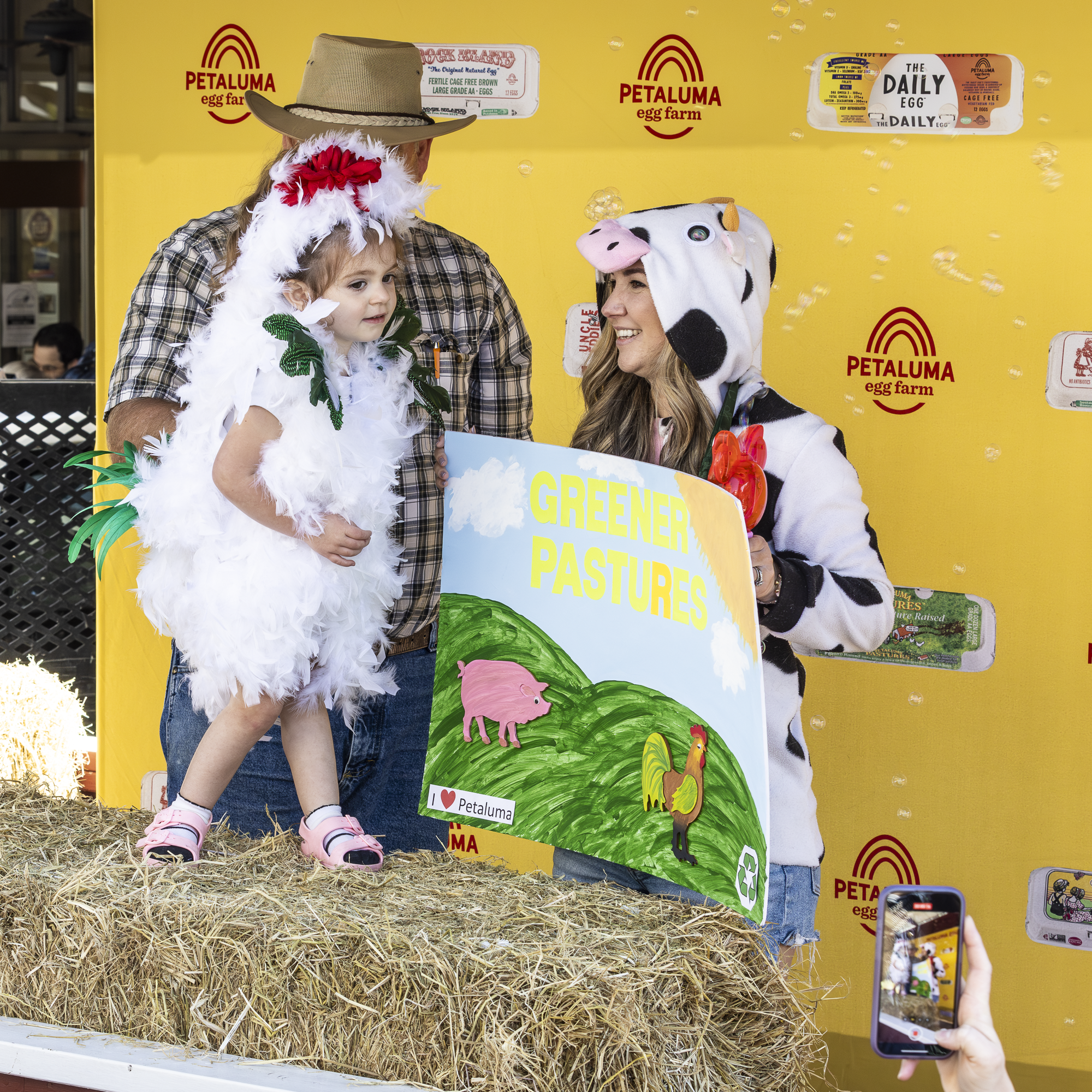
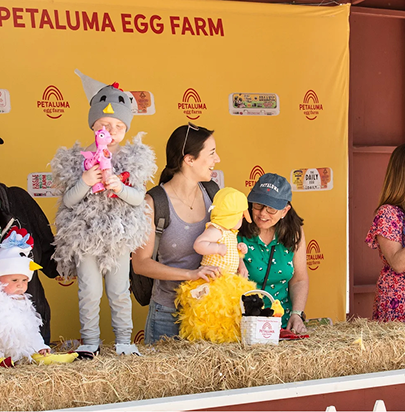
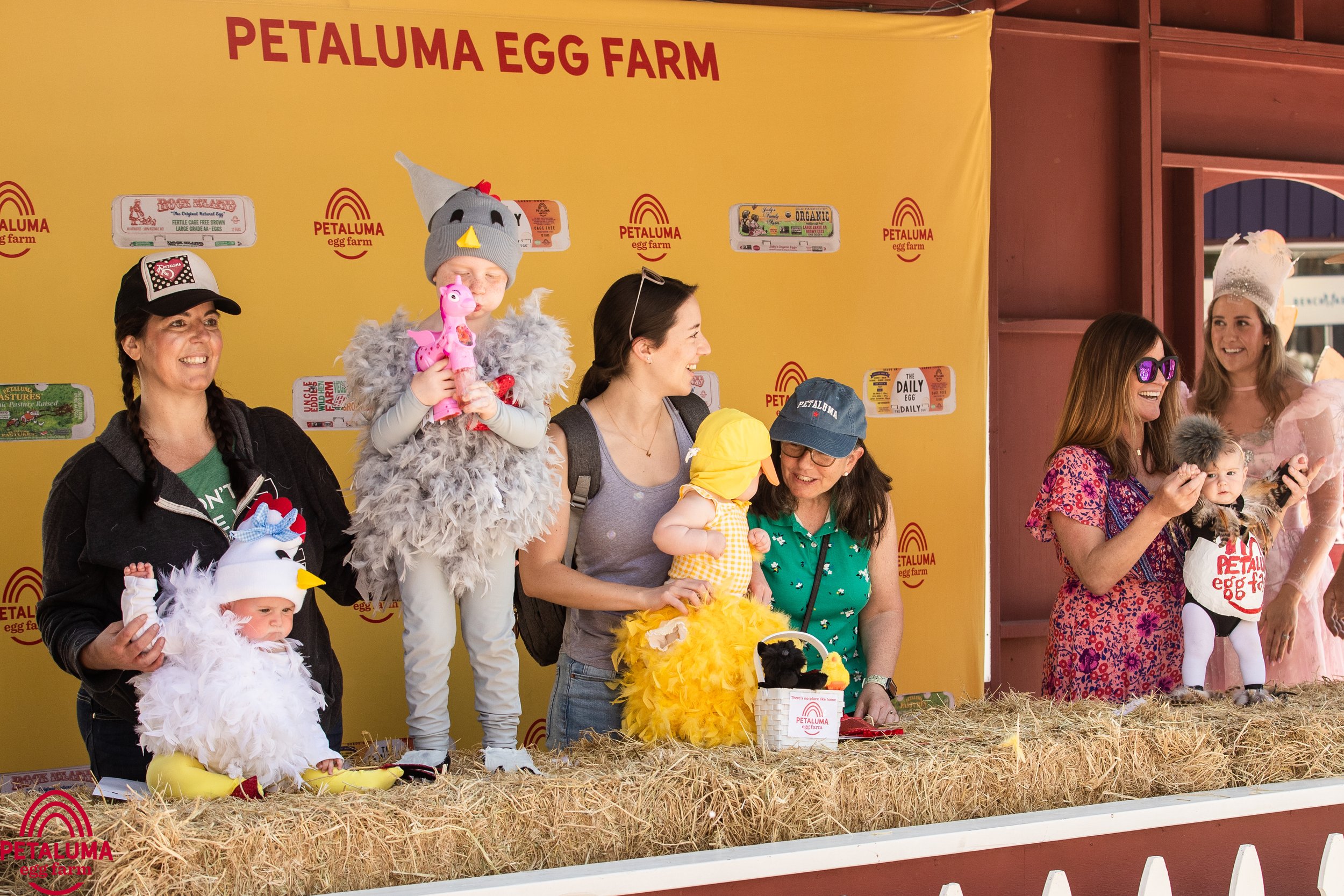
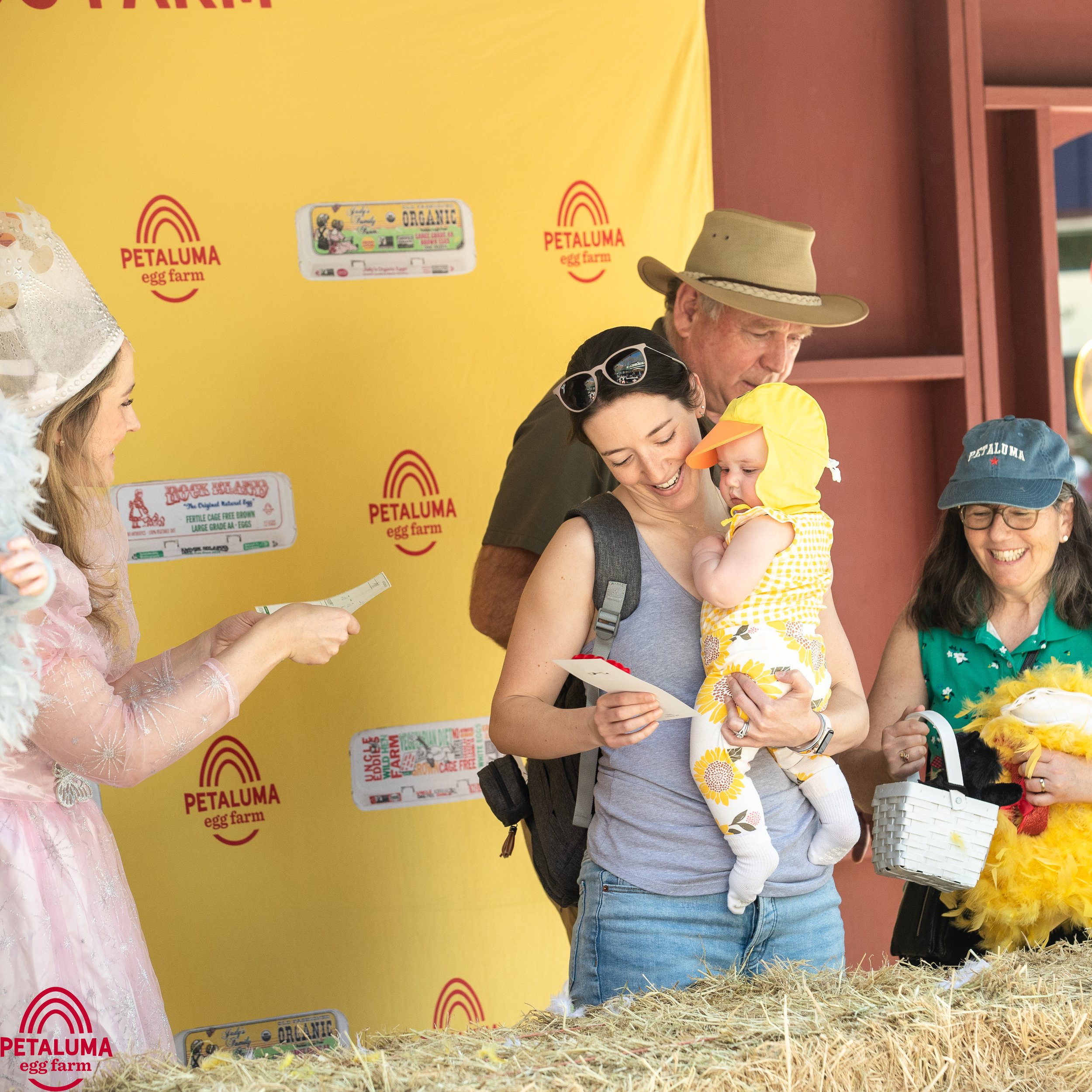
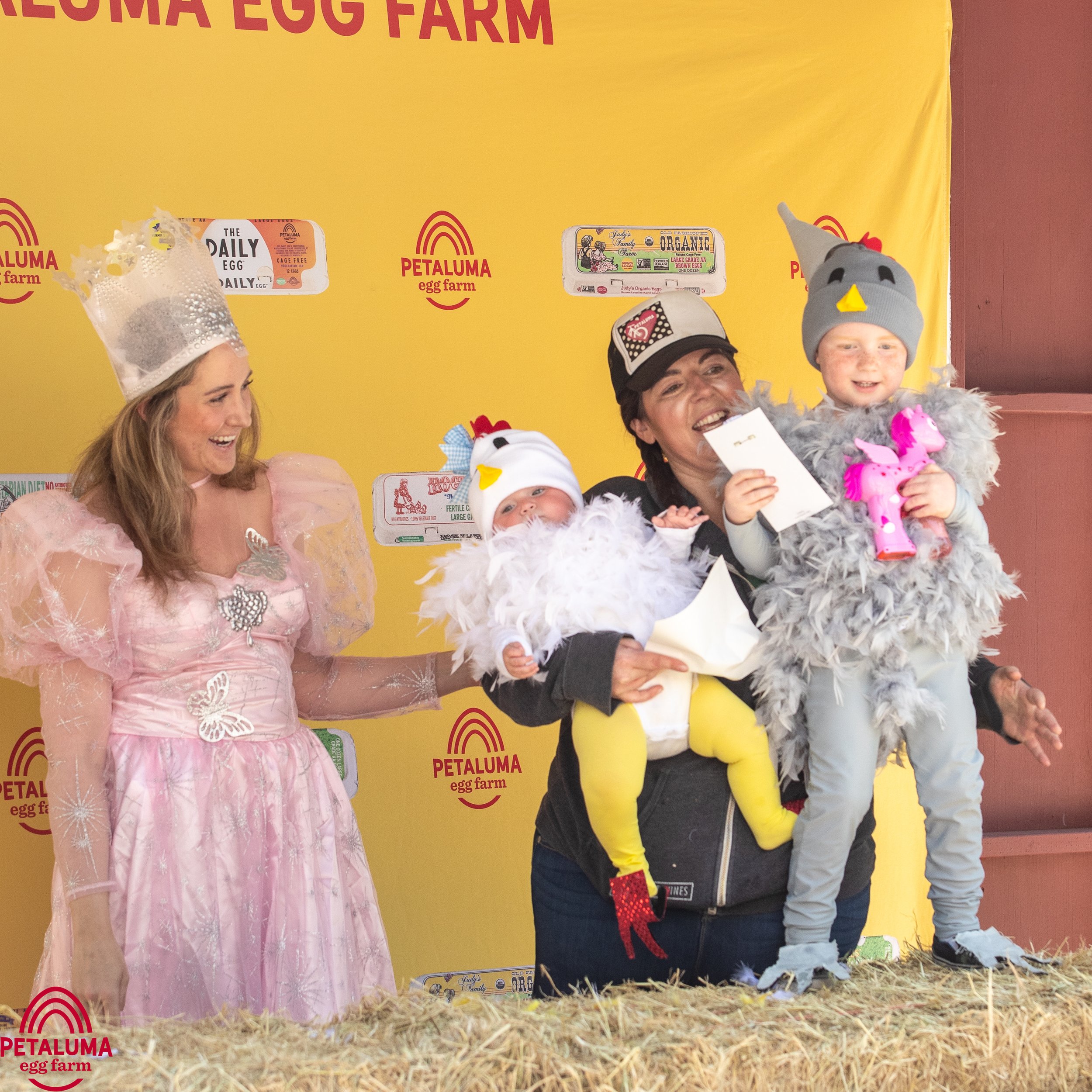
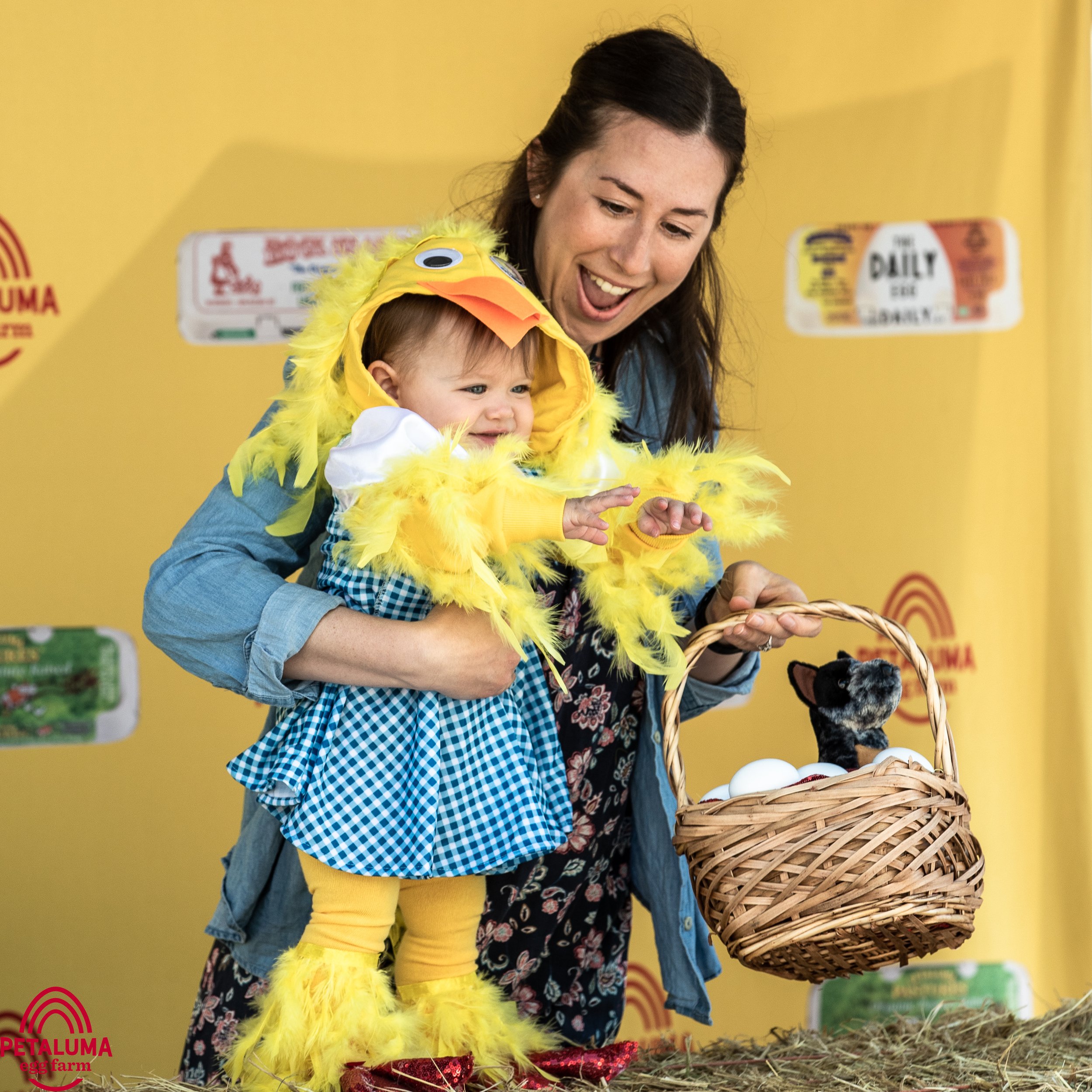
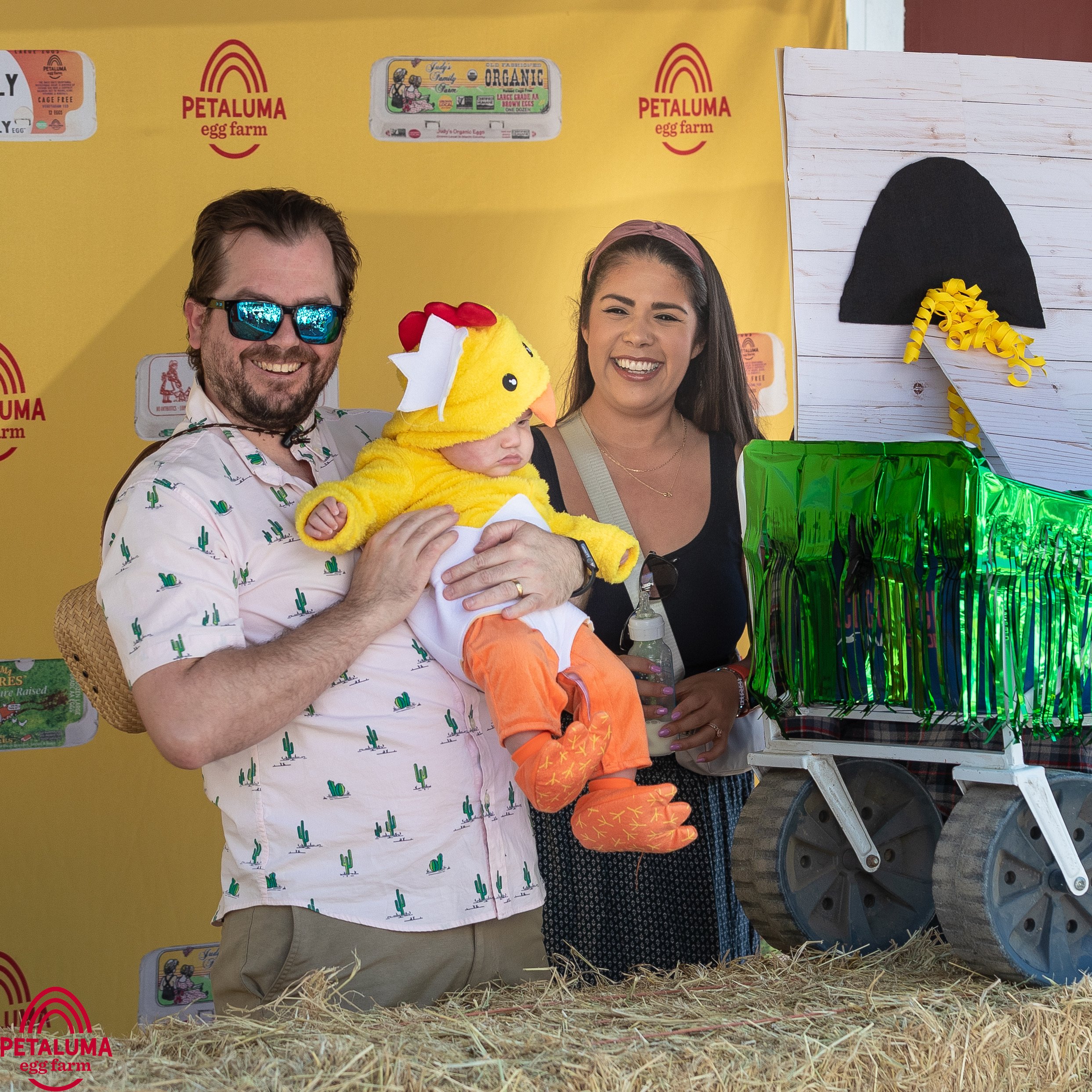
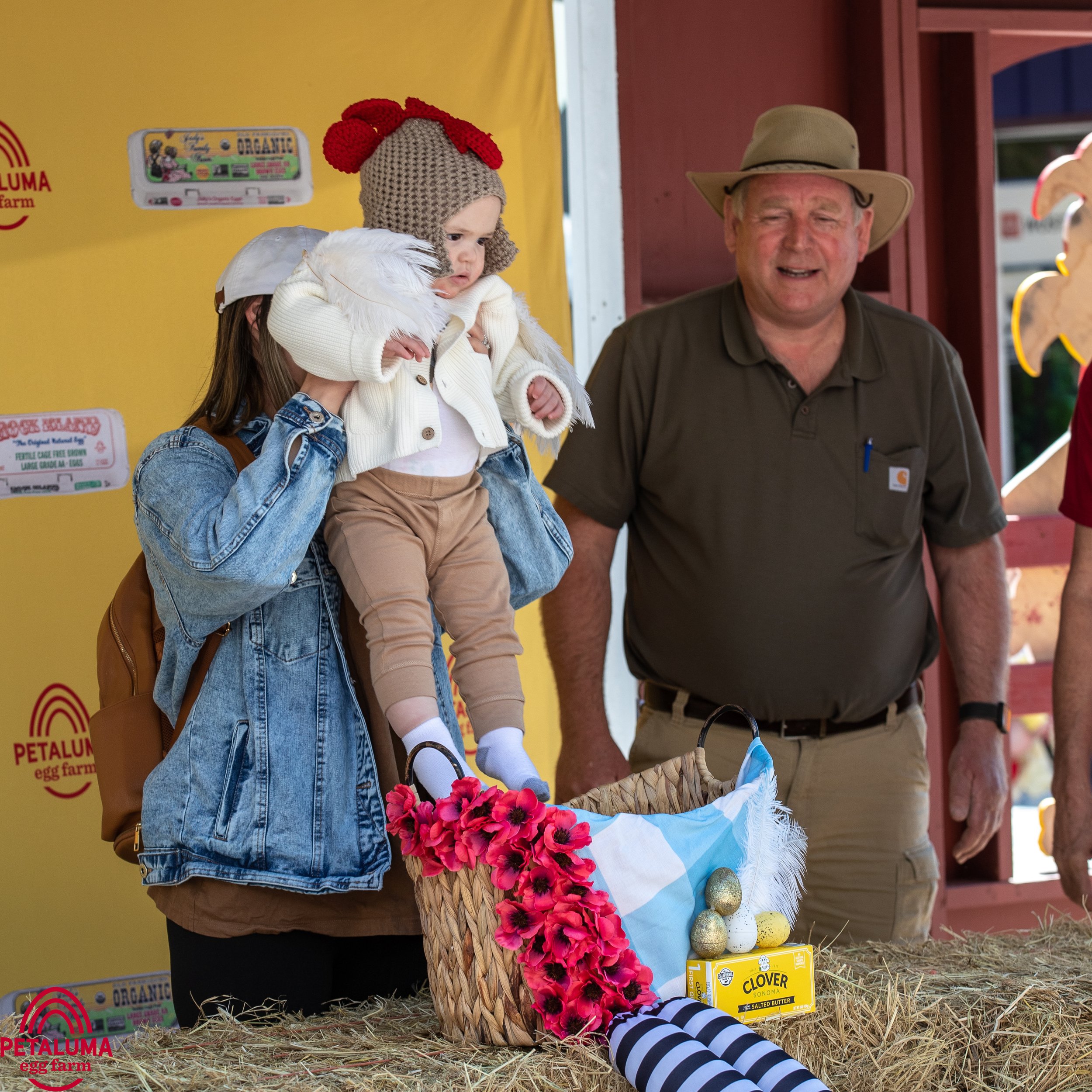
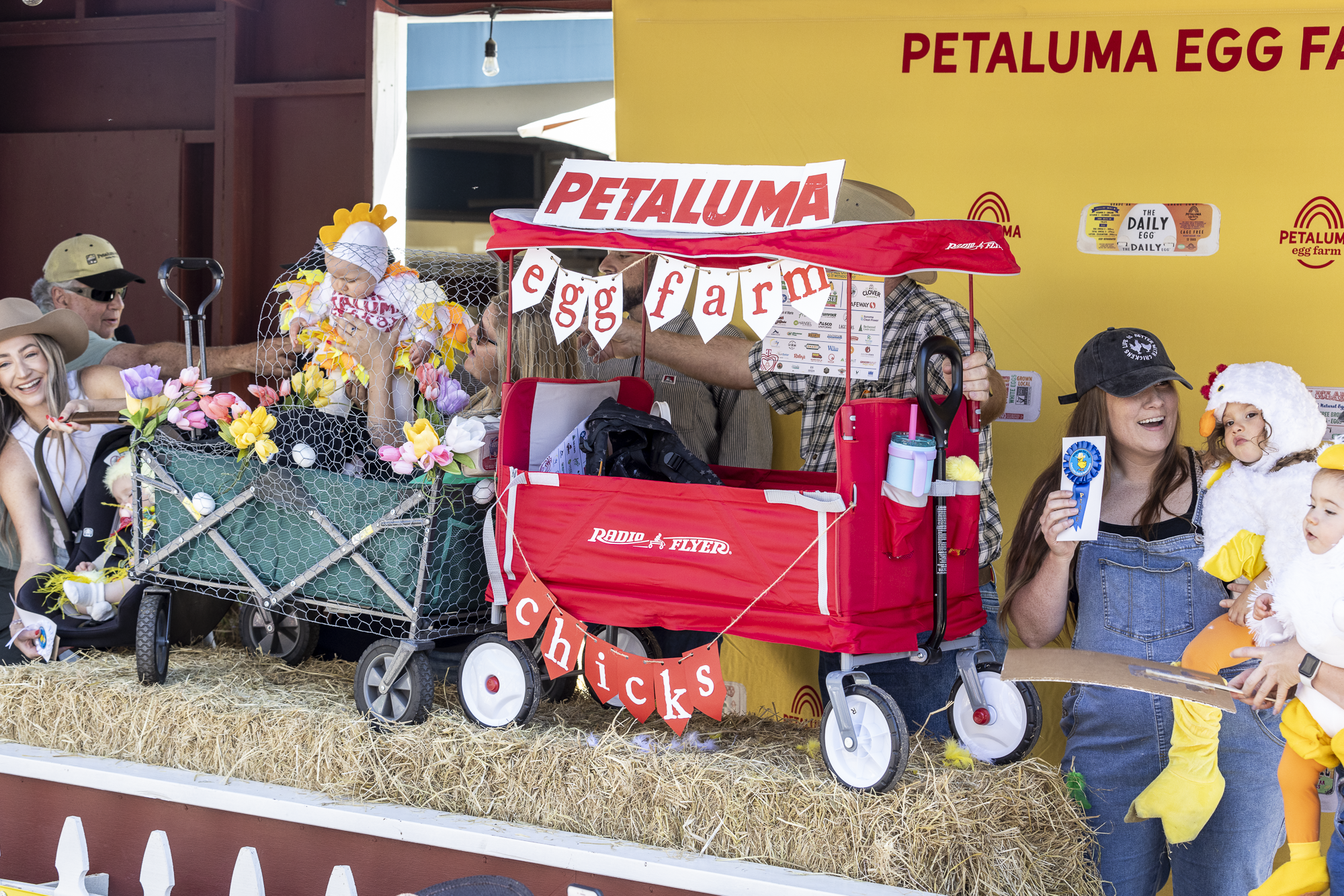
    Thank you to everyone who participated in this year’s Cutest Chick in Town Contest as a part of the Butter & Egg Day Parade. It was a huge success! We had lots of very cute chicks and everyone had a great time.

    Cutest Chick Contest 2024

    Contest Photo

    Contest Photo

    The Results

    1st Place: Aurora and Aniya Jenkins

    2nd Place: Adalynn Enjaian

    3rd Place: Bella Suttle

    1st place received a one year family membership to the Sonoma County Children’s Museum and all contestants received gift bags for participating in the contest.

    We can’t wait to see you all again next year!

  • Celebrating Safely: Egg Handling and Cooking Tips for the Holidays

    Celebrating Safely: Egg Handling and Cooking Tips for the Holidays


    Egg Safety for the Holidays

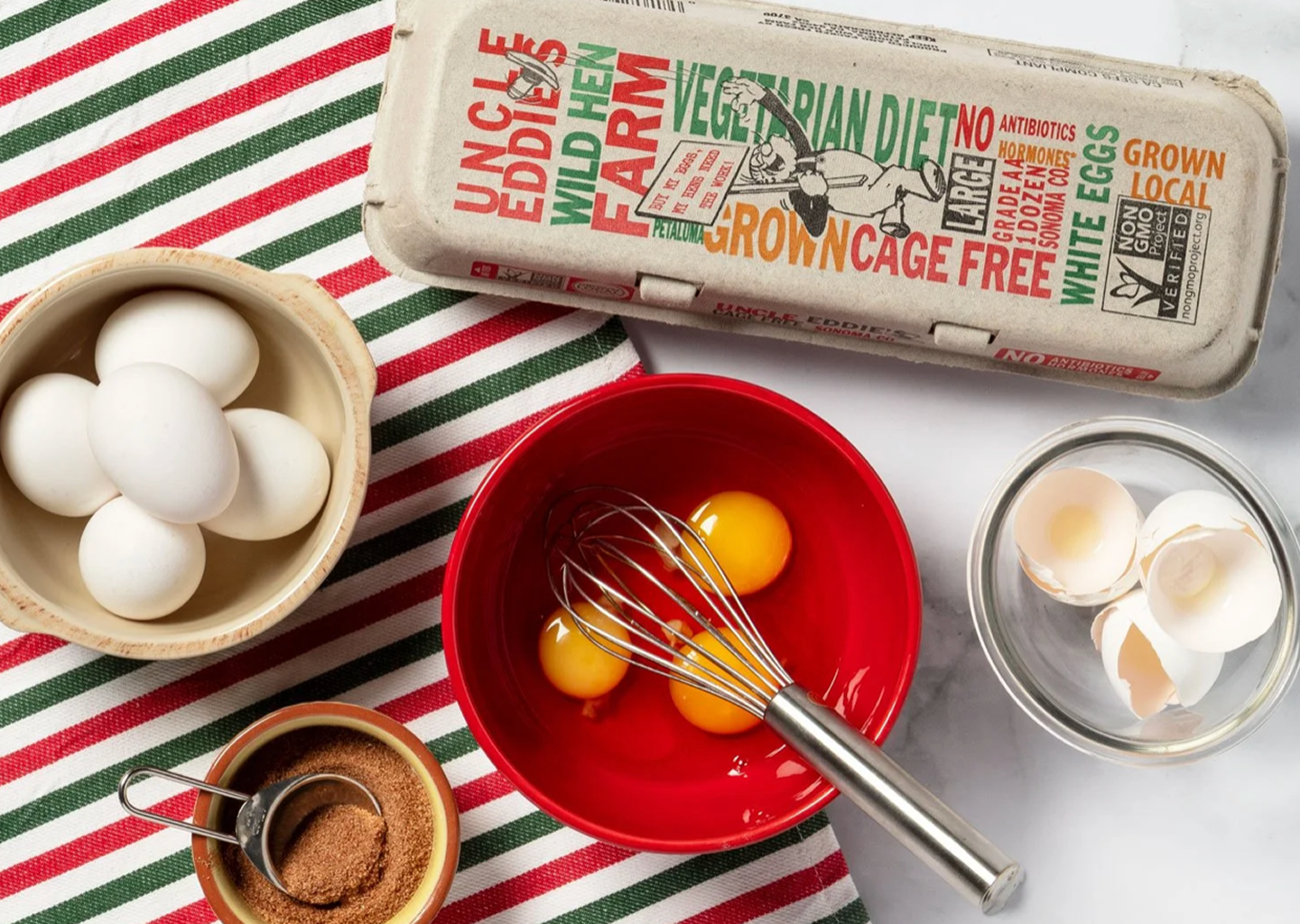
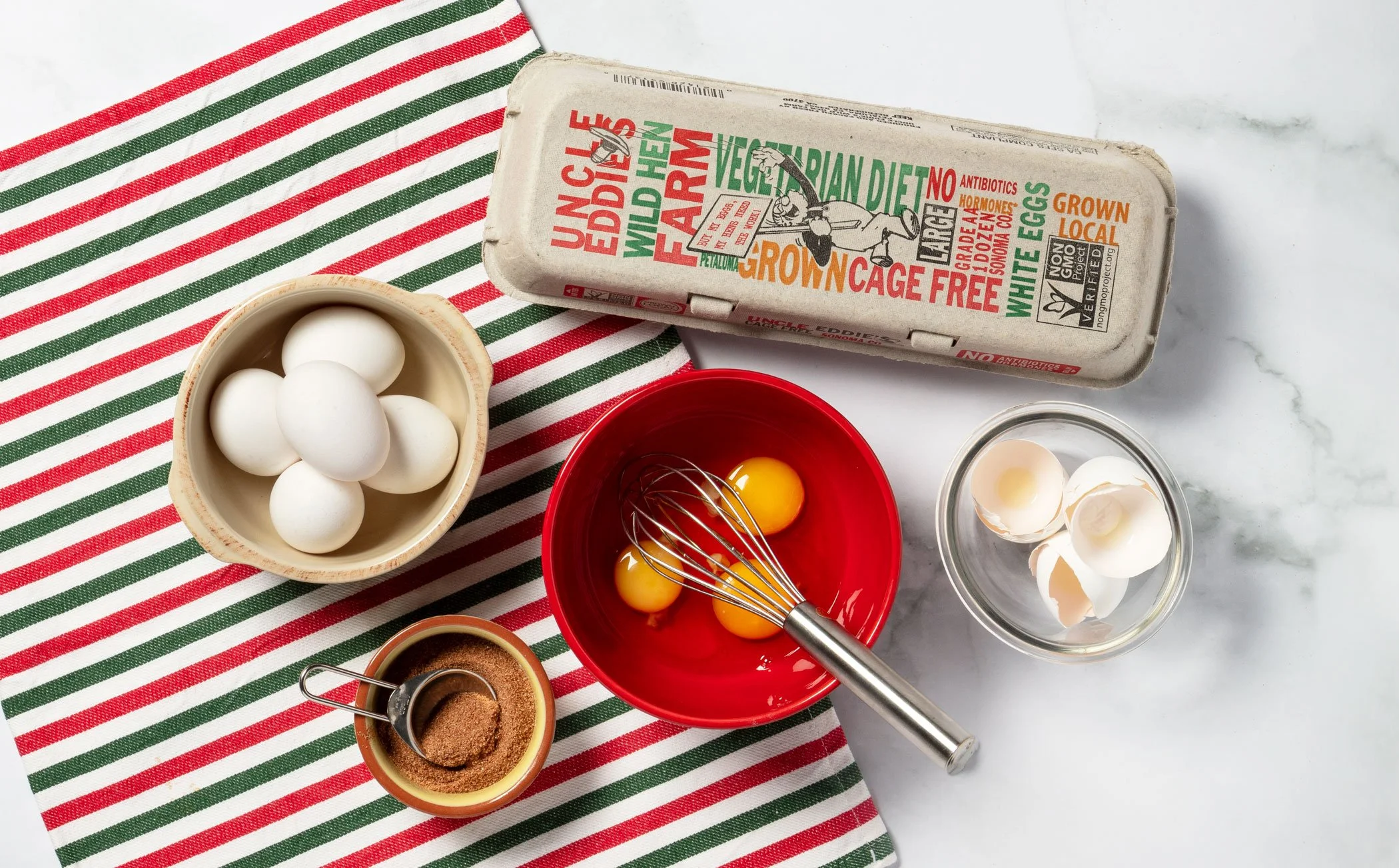
    As the holiday season rolls in, our kitchens become the heart of celebrations. It’s a time for baking, cooking, and creating memories. And what’s a holiday feast without eggs? From fluffy omelets for breakfast to those delectable holiday cookies, eggs are indeed the unsung heroes of our holiday meals. Today, let’s crack into some essential tips for handling and cooking eggs safely during this festive season.

    Freshness First: Picking the Perfect Egg

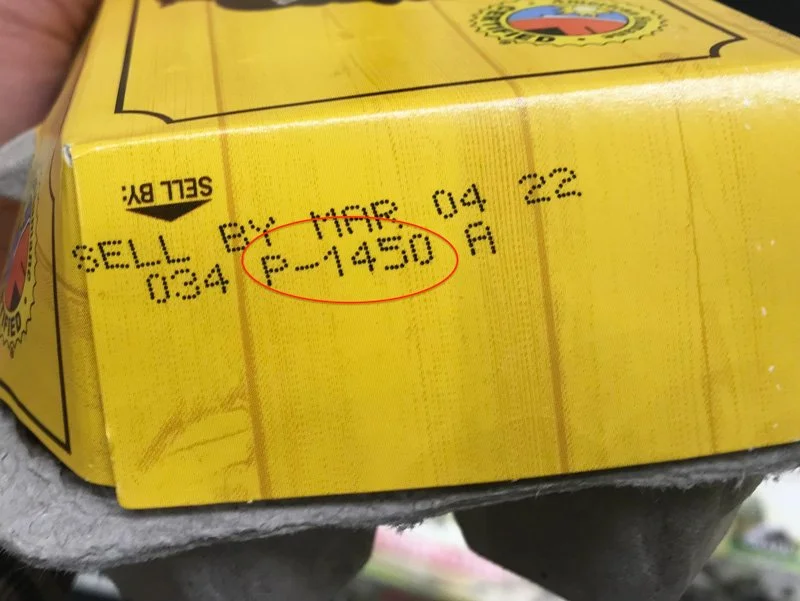
    Fresh eggs are the cornerstone of any delightful dish. When you’re at the store, take a moment to check the sell-by date on the carton. A fresh egg not only tastes better but is safer, too. Remember, fresh eggs from a trusted farm like ours are always a great choice!

    USDA Plant Code Example

    Store with Care

    Once home, store your eggs in their original carton in the coldest part of your fridge. Not the door, though! The temperature there fluctuates, which is not ideal for maintaining the freshest possible egg. Here’s what the USDA says about storing eggs in the fridge:

    After the eggs reach home, they may be refrigerated 3 to 5 weeks from the date they are placed in the refrigerator. The Sell-By date will usually expire during that length of time, but the eggs are perfectly safe to use.

    Source: ask.usda.gov

    Egg Hygiene

    A Clean Break: Hygiene and Preparation

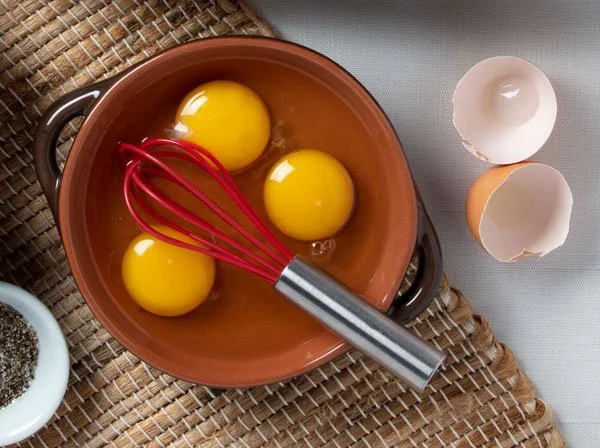
    Cleanliness is key to egg safety. Wash your hands thoroughly before and after handling eggs. And, if you’re cracking eggs for a recipe, do it in a separate bowl. This way, if for some reason an egg is bad or you have some rogue pieces of shell, it doesn’t ruin whatever you’re mixing with your eggs.

    Cooking to Perfection

    Whether you’re boiling, frying, or baking, cooking eggs properly is crucial. For dishes where eggs are consumed partially cooked or raw, like homemade eggnog or mayonnaise, make sure you use eggs from a farm you trust.

    And for those sunny-side-up fans, cook your eggs until the whites are completely set and the yolks begin to thicken. If you’re more of a scrambled type, ensure they’re firm throughout.

    Holiday Eggnog

    The Star of the Show: Incorporating Eggs into Holiday Recipes

    Now, for the fun part – using eggs in your holiday cooking! Eggs are incredibly versatile. They can be the star of a dish or a crucial binding ingredient. From rich, savory quiches to sweet, airy meringues, eggs bring holiday recipes to life.

    Leftover Love

    If you have leftover cooked egg dishes after your holiday feast, don’t let them go to waste. Store them in the fridge within two hours of cooking, and enjoy them within 3-4 days.

    As we wrap up, remember, handling and cooking eggs safely is as essential as the recipe itself. By following these simple tips, you can ensure your holiday dishes are not only delicious but safe for everyone to enjoy.

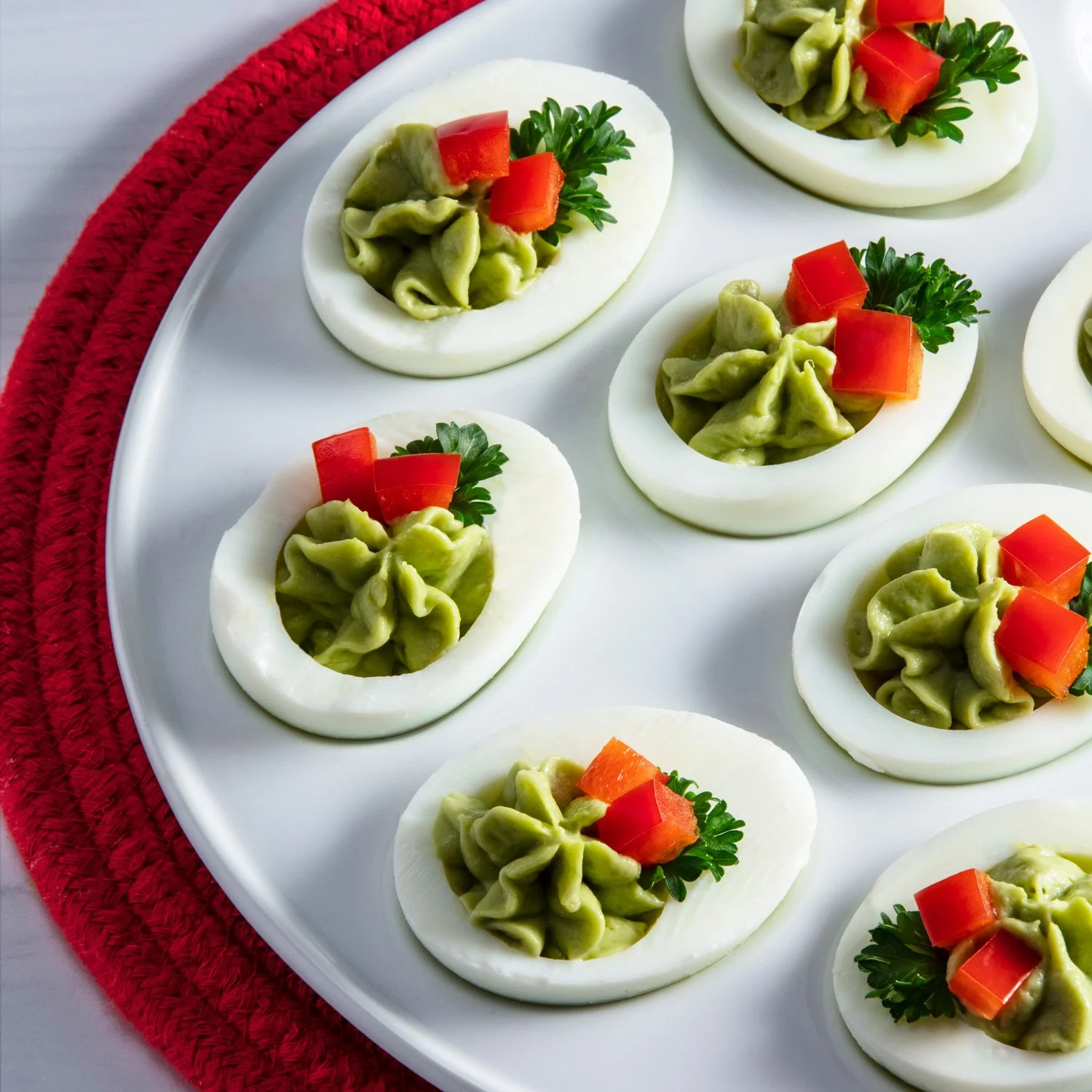
    Deviled Eggs Wreath


    Happy Cooking!

  • Egg Shell Cracker Review

    Egg Shell Cracker Review

    There are a lot of intriguing egg gadgets on the market – from egg cookers and yolk separators to fancy omelet pans. We’ve decided to give some of these gadgets a try to see if they are worth the hype. We’ll post our results here and on our social media pages, hoping to share some helpful insights.


    Egg Shell Cracker

    2 Eggs out of 5 Rating

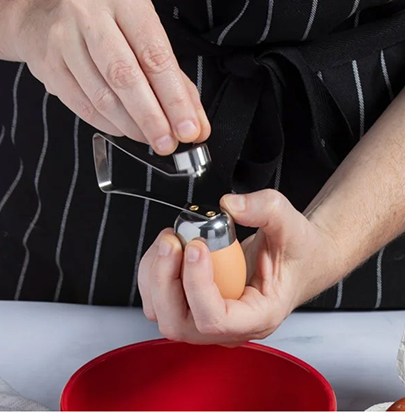
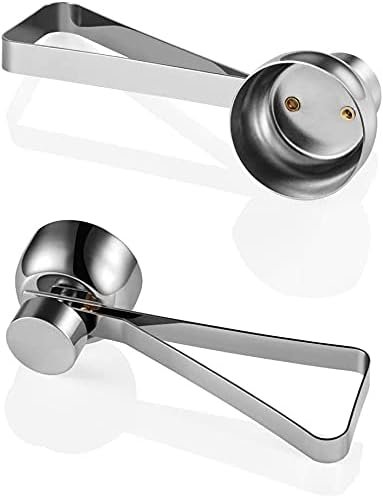
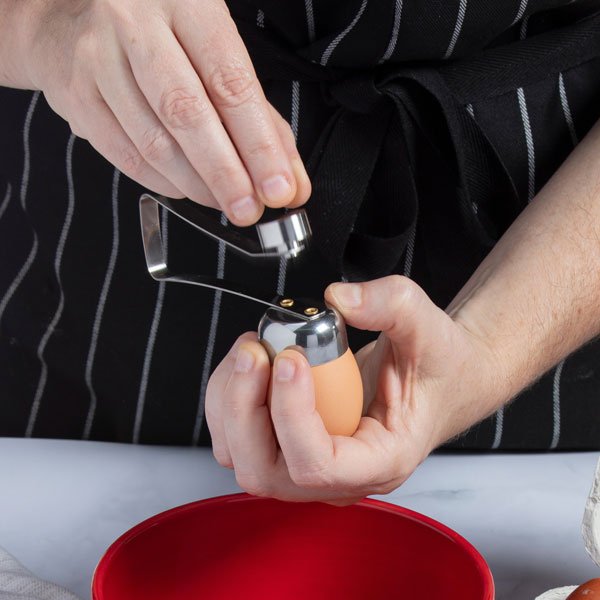
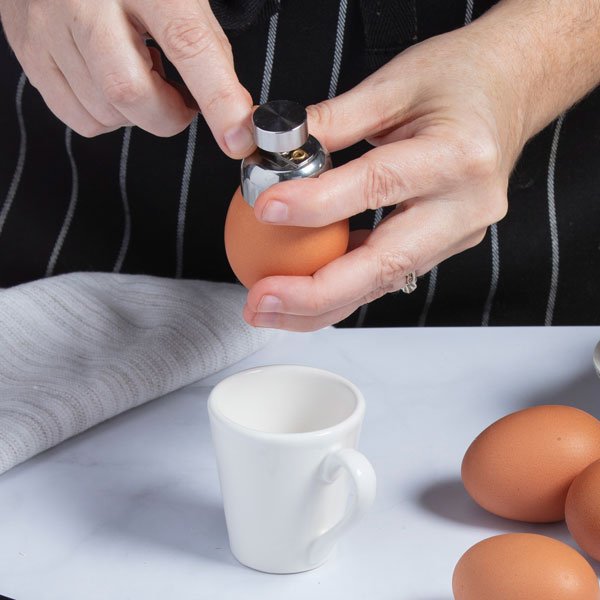
    For those who love a soft boiled egg for breakfast, we thought we’d test an egg shell cracker. We ordered a COLIBROX tool that claims it also works on raw eggs as well. Directions indicate that you set the round cup portion over the top of the egg, lift up the handle and let it go, allowing the weight at the end of the handle to hit the cutter and push it into the top of the egg, which should produce a clean, round hole.

    Egg Shell Cracker Tool

    Raw Eggs

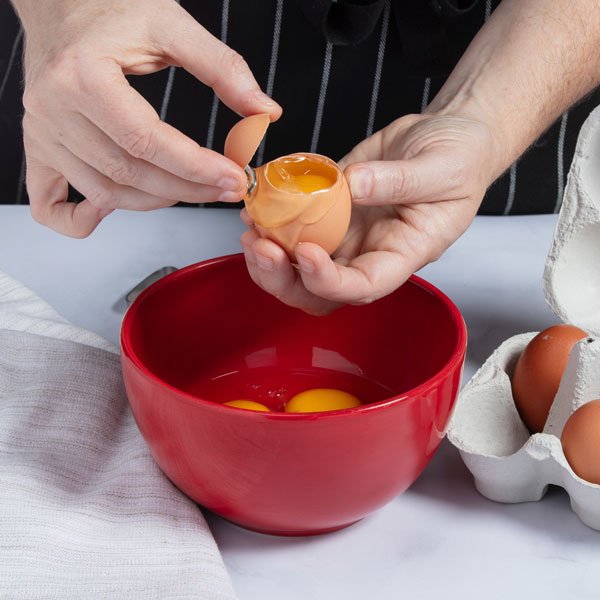
    We first tried holding the egg while using the cracker. It took several tries to get the tool to cut far enough through the shell to allow us to remove the top section. On the third attempt and by pulling the handle up higher each time, we finally cut deep enough to be able to remove the top. However, it was a rather messy outcome with egg whites running over the sides, so we tried a different approach.

    Egg Cracker Test 1
    Egg Cracker Test 2
    Egg Cracker Test 3

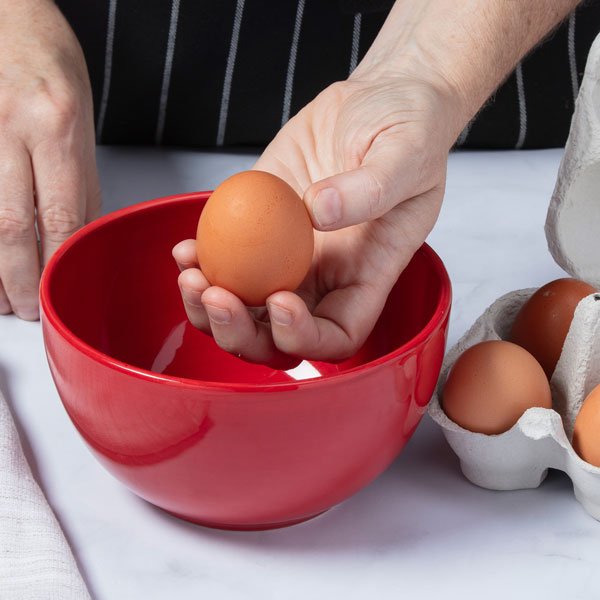
    Next, we tried leaving the egg in the carton to see if that would make a difference. We still had trouble getting a clean cut the first couple of attempts. And again, when we did remove the top, the egg whites ran down the sides.


    Soft Boiled Eggs

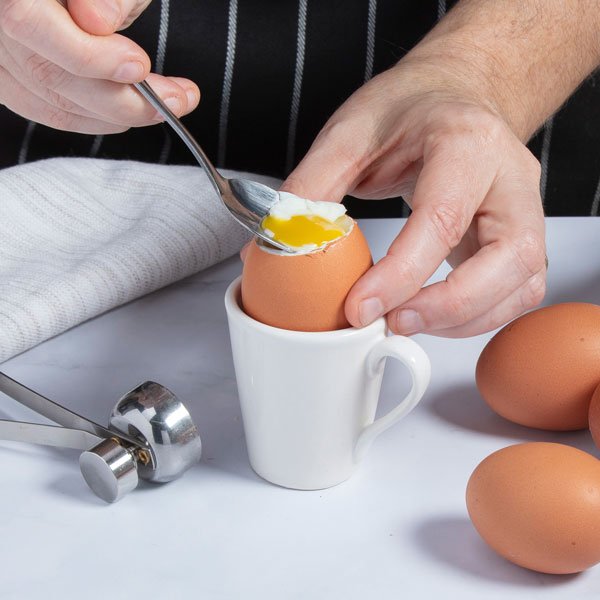
    Now for the reason we bought this gadget in the first place — to see how well it cuts the top off a soft boiled egg! By this point, we had a better sense of how much pressure was needed to break through the shell, so it worked a little better. The tool effectively made a nice round hole just big enough for a small spoon or small piece of toast.

    Soft Boiled Egg Result
    Soft Boiled Egg Result 2

    Conclusion

    Unless you really want a perfectly round hole at the top of your soft boiled egg, we don’t see much advantage to this tool, especially when it comes to using it on raw eggs. It wasn’t easy to find the right pressure needed and ended up being far messier than just cracking the egg over the edge of a bowl. We suggest your gadget drawer can do without this one!

  • What Sustainability Means To Us

    What Sustainability Means To Us

    Petaluma Egg Farm Solar Panels

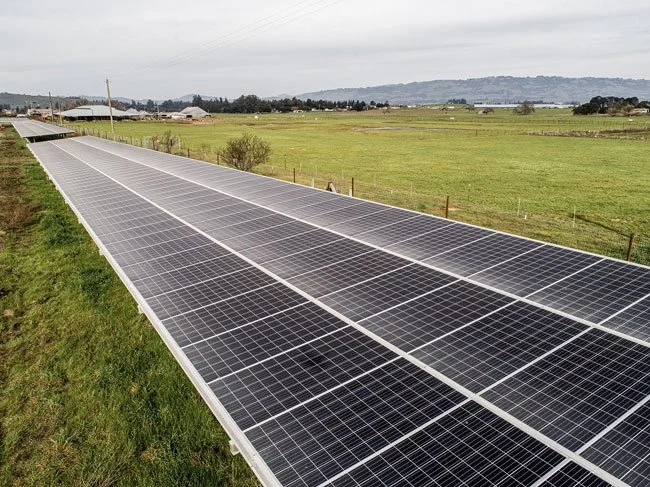
    Petaluma Egg Farm’s solar panels provide power for our egg coolers and more.

    Sustainability is important to us at Petaluma Egg Farm, but we want it to be more than just a buzzword. Foundationally, we view sustainability through the lens of environmental impact and we see it as a process of continual improvement. As new technology becomes available and our understanding of our impact on the environment changes, there are always new opportunities emerging to reduce our environmental impact. Below are some of the steps we’ve taken on our sustainability journey, as well as some plans we have for our next steps.

    Chicken Manure as Fertilizer

    Chicken manure ready to be used as fertilizer by local farms.

    Natural Fertilizer

    Chickens give us two things: lots of eggs and lots of manure. We have a good handle on what to do with the eggs, but it’s a little more complicated to manage the manure. We provide our manure to other local farmers and ranchers who then spread it directly onto their fields. The remaining manure that does not make it onto a field is turned into compost, which is also used for soil enrichment. Chicken manure is rich in nitrogen, which is essential for strong and healthy plant growth. Our chickens eat a largely plant-based diet, so when their manure is spread back onto the fields, they are giving their leftover nutrients back to the ground, sequestering carbon and completing the cycle.

    Solar Panels

    We have also installed solar panels at our ranch to power the coolers that keep our eggs cold and to power the machine that washes and cleans our eggs. We believe solar power is a key piece of the clean energy movement. Increasing our reliance on solar energy is more than just an economic decision – it’s an affirmation of our commitment to reducing our carbon footprint.

    Sheep on Hill

    Mother Nature’s Lawnmowers

    My dad always likes to call sheep “Mother Nature’s lawnmowers.” That’s why we give other local ranchers access to our excess pasture for grazing. By allowing other animals to graze, we reduce our need to mow the grass mechanically. The less we use mechanical mowers, the fewer greenhouse gases we produce.

    Delivery Trucks

    Carbon Footprint

    Finally, and most important to our sustainability story, we’re local. We only supply eggs to Northern California, which means that over 90% of our customers are within 100 miles of our farm. We believe that we’re the only egg farm in Northern California that can make that claim. This contrasts sharply with commercial egg producers who often ship their eggs thousands of miles, leading to a large carbon footprint from shipping alone.

    Uncle Eddies Eggs

    In addition, that long journey can affect the freshness of eggs meaning they are often two weeks old or more before arriving on grocery store shelves. Our eggs are sometimes laid and delivered in as little as three days. We believe that locally produced food is better for the environment, better for the people, and better for the chickens. The decision to buy our eggs doesn’t just ensure you’re getting a fresher product; it’s also a choice that tangibly supports the environment.

    For the future, we’re exploring burning our manure as a means of powering our chicken ranch, further reducing our reliance on fossil fuels for electricity. In addition, we’re looking into electric alternatives for our diesel delivery trucks and refrigeration units. These are just a couple of future steps in our sustainability journey.

    Every day, we’re a local Petaluma family working on our Petaluma farm alongside other local Petaluma families to raise chickens that lay eggs feeding families throughout Northern California. Every day, we strive to take good care of the environment and our chickens to ensure that our farm and our world will be here for the next generation.

  • Silicone Egg Mold Review

    Silicone Egg Mold Review

    There are a lot of intriguing egg gadgets on the market – from egg cookers and yolk separators to fancy omelet pans. We’ve decided to give some of these gadgets a try to see if they are worth the money. We’ll post our results here and on our social media pages, hoping to share some helpful insights. If you have gadget suggestions for us to review, send us a note.


    Circle Silicone Egg Mold

    3 out of 5 eggs rating

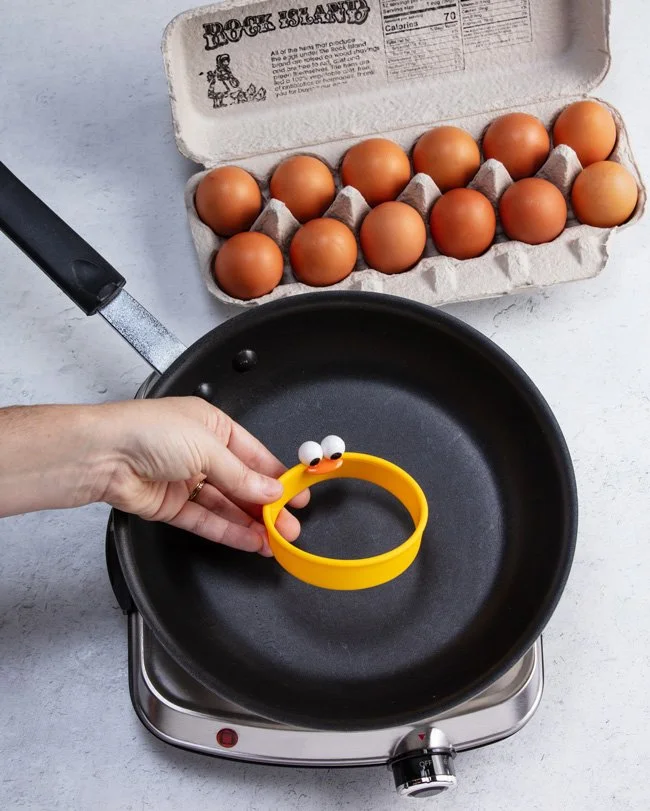
    We’ve been seeing all sorts of silicone egg molds advertised, from simple to complex. This little cutie caught our eye, so we thought we’d give it a try!

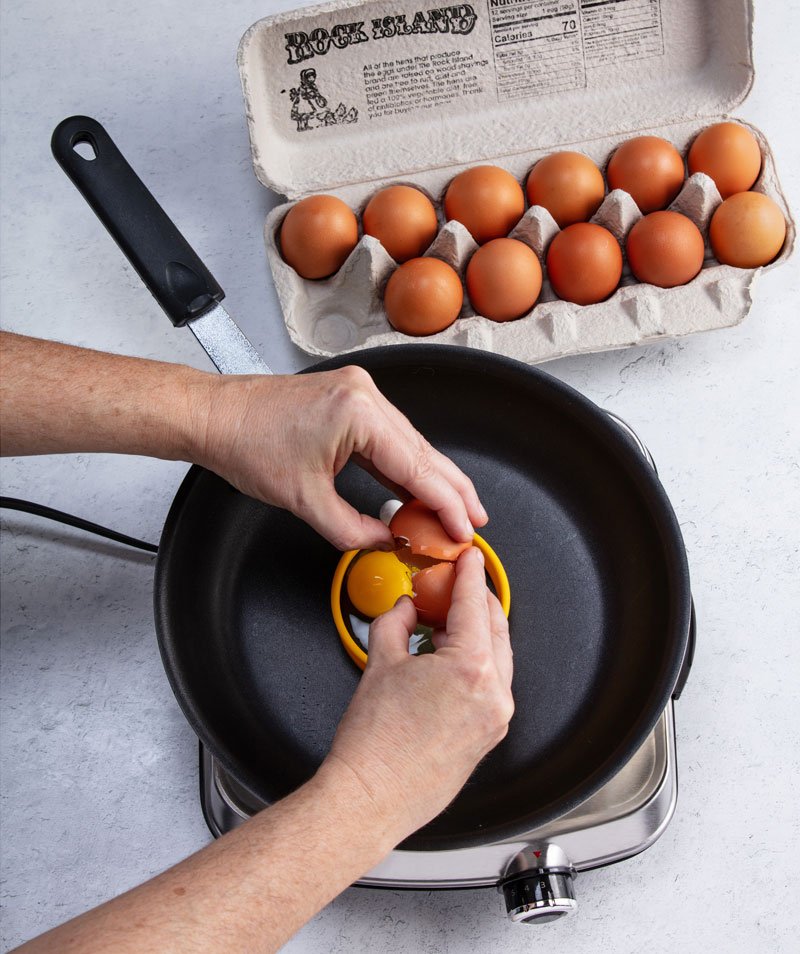
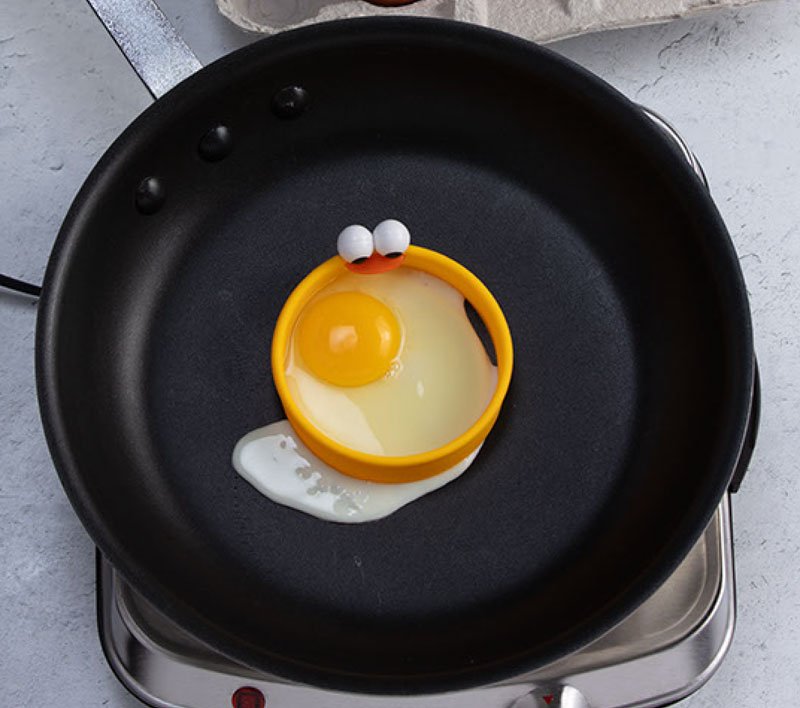
    First Attempt: Round one, we just went for it. We didn’t do anything special to the pan and set the heat on medium. We cracked the egg into the mold and it immediately ran out the sides…definitely defeated the purpose of the mold!

    Cracking egg into silicone mold
    Egg running out of mold

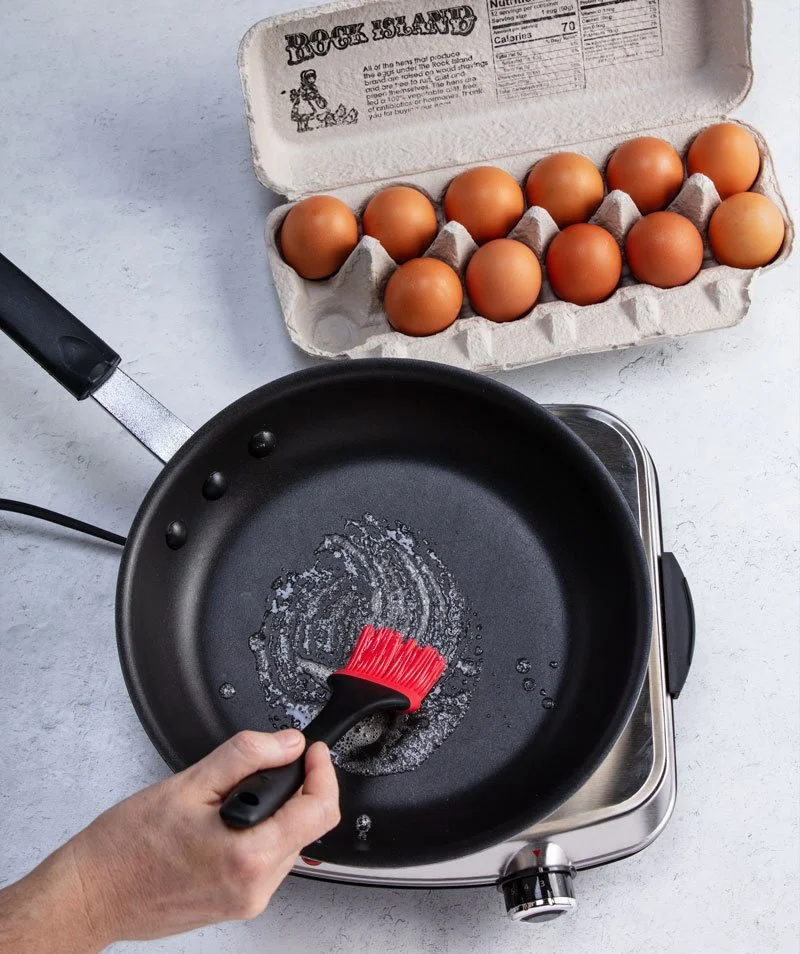
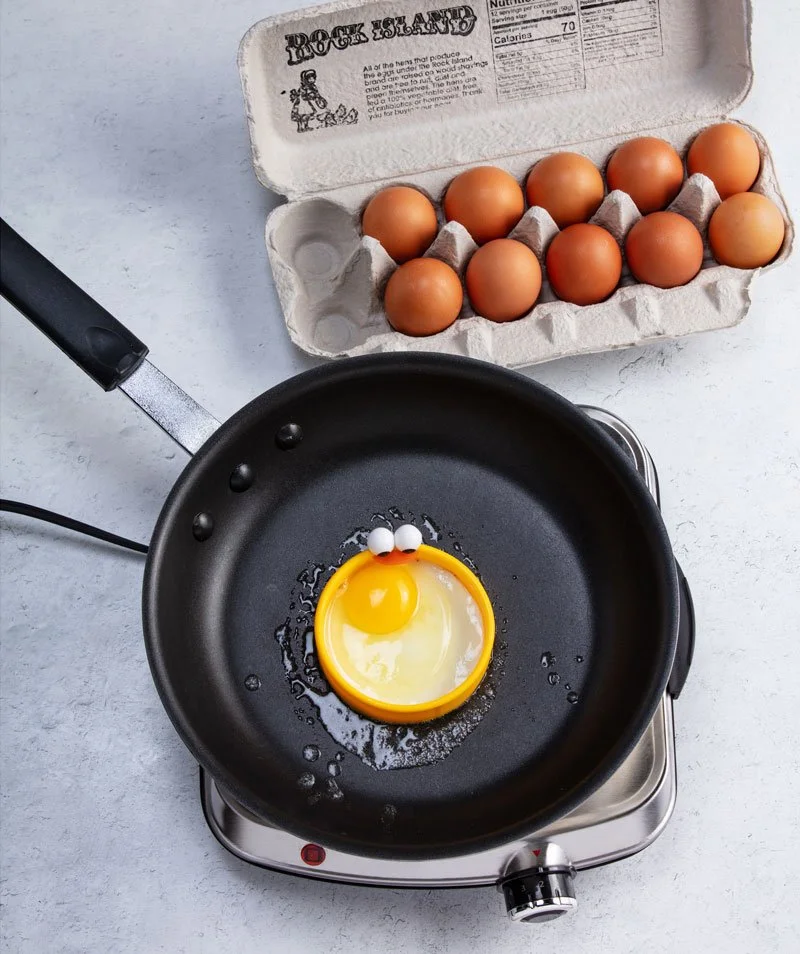
    Second Attempt: We tried two new steps – First, we turned up the heat to medium high so the egg would instantly cook quicker, preventing the whites from leaking out. Second, we added a little butter to both the pan and the bottom of the mold, and then gently pushed down on the mold to achieve a better seal to the pan. Success!

    Adding butter to the mold
    Egg successfully in mold ring

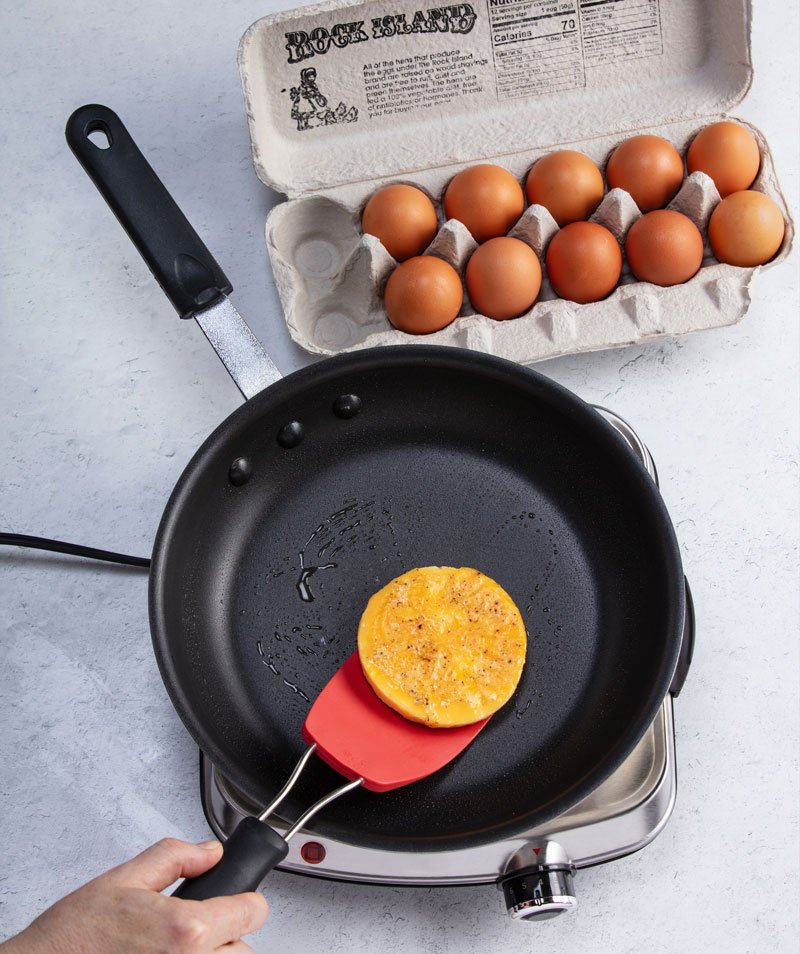
    Third Attempt: For our final endeavor, we wanted to make a perfectly round egg patty to put on a breakfast sandwich. We started by buttering the pan and the mold and creating a seal for the mold (see tip in previous attempt). Then we poured two eggs beaten with a little salt, pepper and a dash of milk into the mold. Two eggs turned out to be too much, taking a long time to cook, but one egg was just perfect!

    Pouring egg into mold for patty
    Round egg patty result
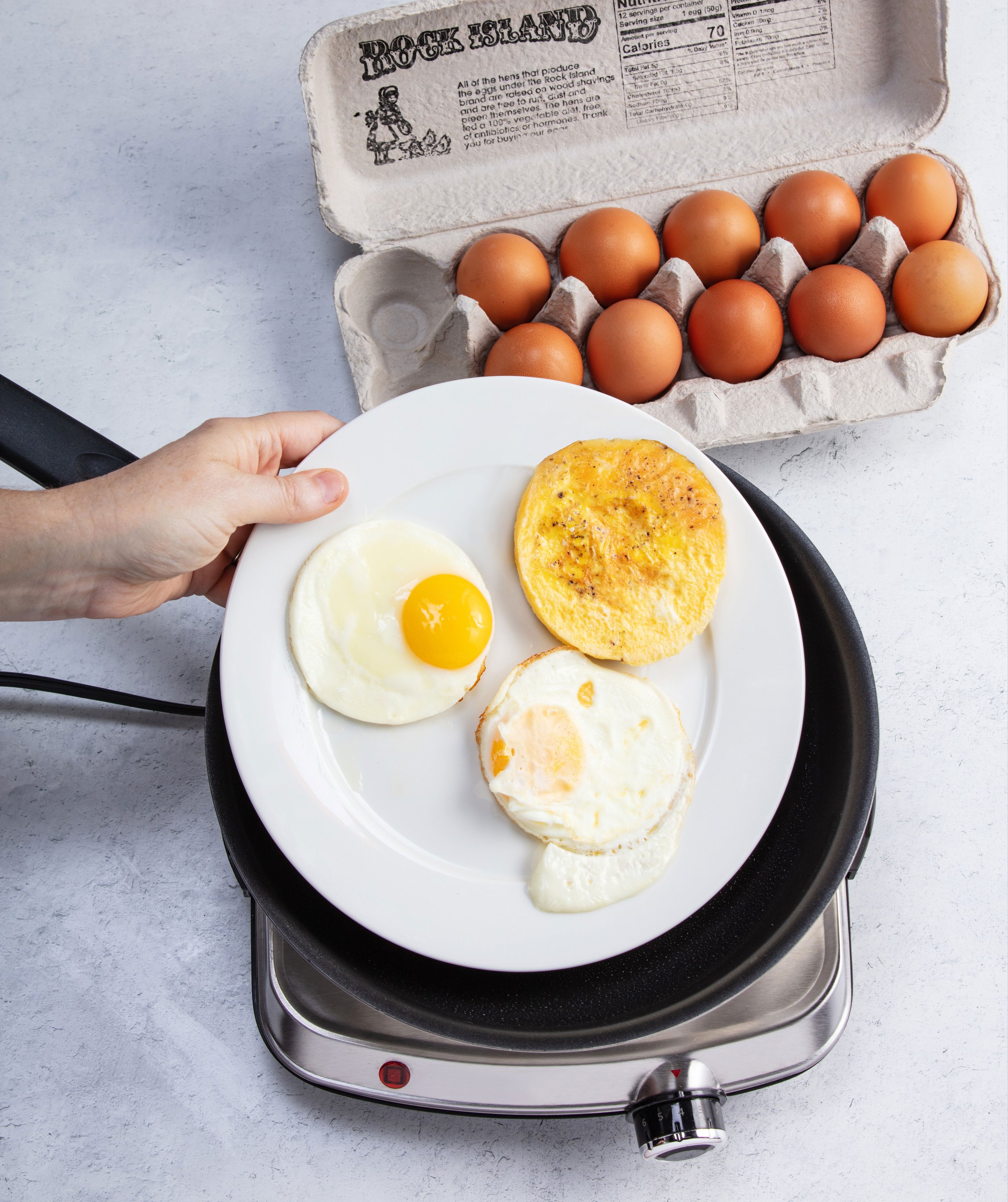
    Round egg patty on plate

    Results: It’s a fun little gadget if you want a perfectly circular egg. Just remember to add a little butter or oil to create a seal – and make sure the pan is hot before cracking the egg into the mold.

    If you’re making an egg patty, don’t overfill the mold or you will be waiting a long time for it to cook.

    We’d probably choose a more exciting shape next time to add to the fun factor…maybe a star, a heart or a flower!

  • Are Chickens Dinosaurs?

    Are Chickens Dinosaurs?

    The History of Chickens

    The History of Chickens

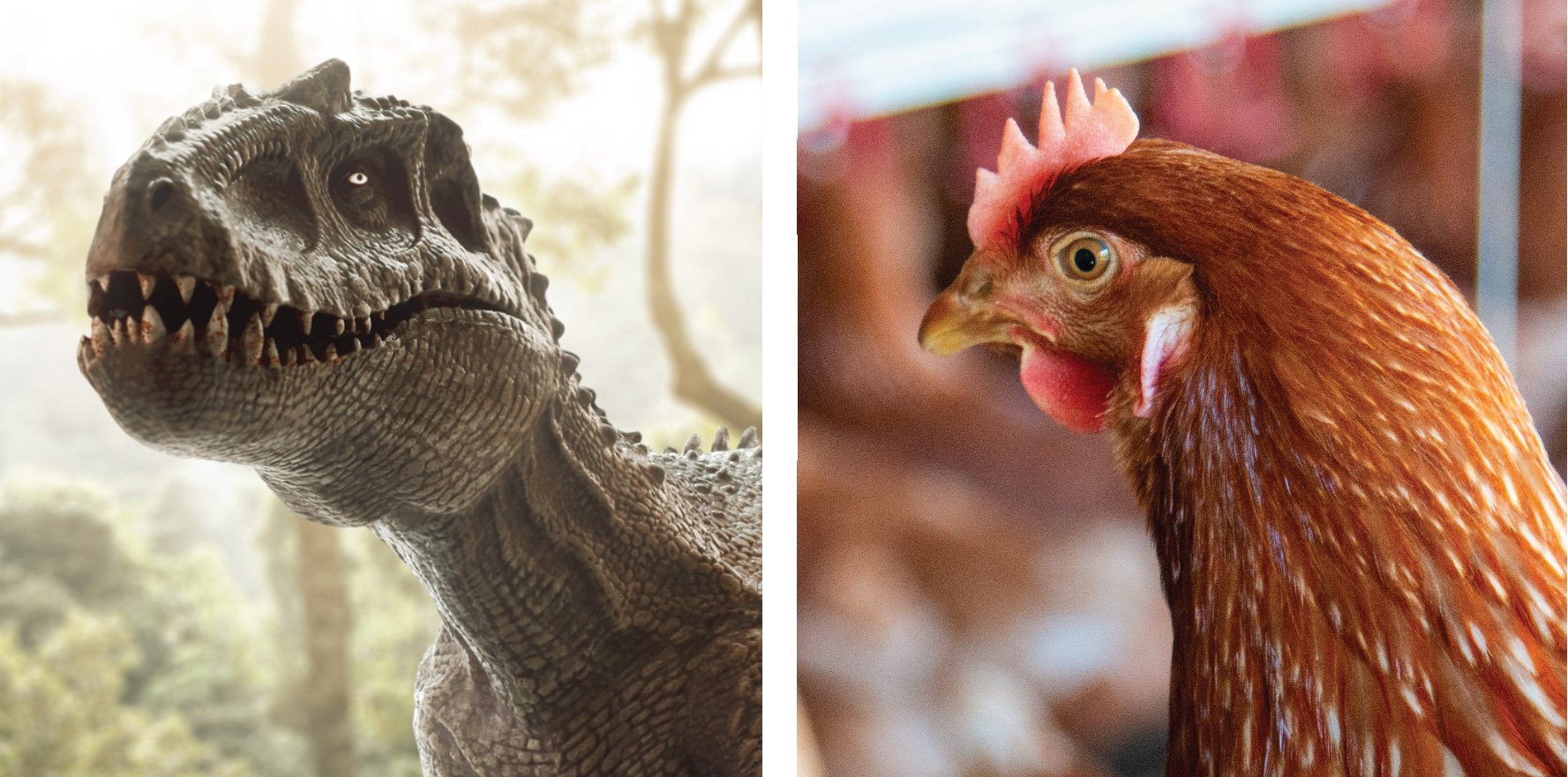
    No, but chickens did descend from dinosaurs and have proven to be more similar to dinosaurs (specifically the T. rex) than any other living creature! In 2004, an international team of geneticists produced a complete map of the chicken genome. They determined that the chicken was the first domesticated animal, the first bird – and consequently, the first descendant of dinosaurs.

    Red Junglefowl

    Red Junglefowl.

    The domesticated chickens that produce our eggs today are descendants of the red junglefowl (Gallus gallus domesticus) and are believed to have originated from Southeast Asia. However, before they became a source of food the world over, they were revered for their fighting prowess. The legend goes that in the first decade of the fifth century B.C. the Athenian general Themistocles stopped to watch two cocks fighting on the side of the road. He was struck by their ferocity and summoned his troops to watch the two roosters fight. He used this battle between roosters as an analogy for how to fight in their upcoming battle with the Persians. Historians believe this may have been the start of cockfighting, which has the dubious honor of being the world’s oldest continual sport.

    Chickens were used only sporadically for food until the Egyptians mastered the technique of artificial incubation – a method that they kept secret from outsiders for centuries! This spurred on the availability of chickens, and their popularity grew as a source of meat and eggs throughout the Mediterranean, especially for the Romans who are credited with inventing the omelet and the practice of stuffing birds for cooking.

    As the Romans expanded their empire, they also expanded the footprint of chickens into Europe. Because chickens were a great source of food for long sea voyages, European explorers and colonists brought them along to the Americas, Africa and other parts of the world.

    Large-scale industrial production of eggs and poultry began in the 20th century, which skyrocketed the availability and demand for both meat and eggs. Many advancements have been made since then in areas such as chicken health, ethical treatment, and more. In fact, many of these innovations took place right in Petaluma. These innovations include the invention of the modern day incubator and the first pharmacy dedicated solely to chickens.

    A History of Farming in Petaluma

    Petaluma Egg Farm is also part of the legacy of chicken farming in Petaluma. Our grandfather’s uncle, Johnny Mahrt, immigrated to Petaluma from Germany in the 1920s where he started his own chicken ranch. Later, in the 1950s, our grandfather joined him to start working on his ranch and other chicken ranches in the area until he had enough money to start raising chickens on his own ranch.

    Boyd Mahrt

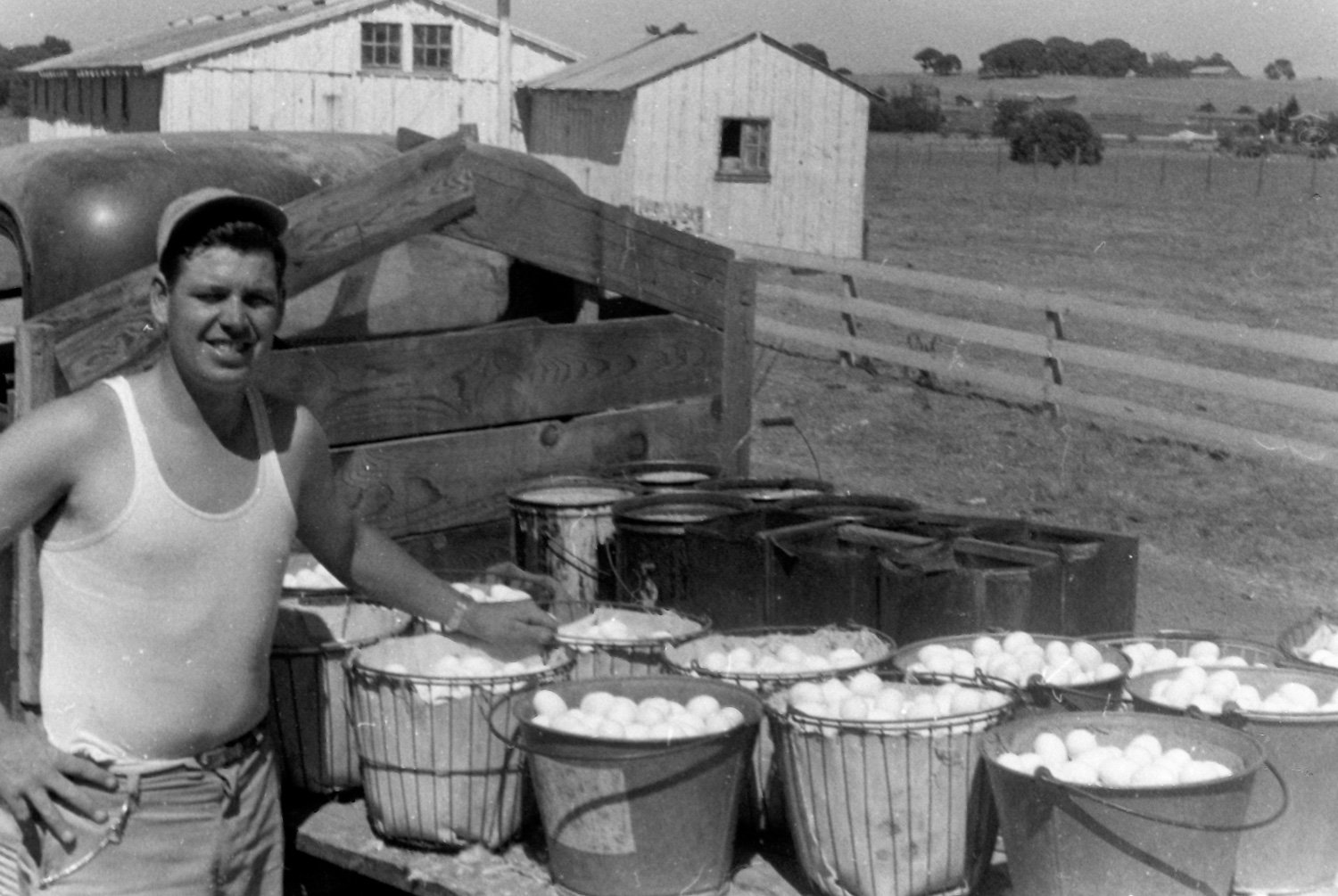
    Boyd Mahrt, affectionately referred to as Opa by his family, immigrated from Germany in the 1950s and eventually started his own chicken ranch.

    Boyd performing daily walk

    Here Boyd is performing a daily walk in one of his chicken houses.

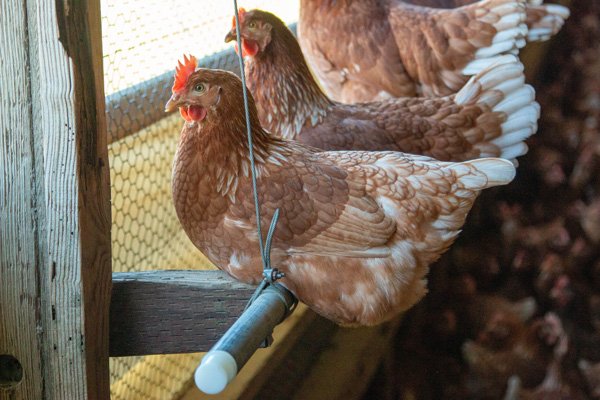
    On our farm, we raise white Leghorn and brown Rhode Island Red chickens. The Leghorn originated in Italy, perhaps even going back to Roman times. The Rhode Island Red is native to the United States through cross-breeding that included brown Leghorns from Italy.

    We’re proud to be a part of Petaluma’s tradition of producing eggs, though we’re now the last independent family-run egg farm left in Sonoma County. However, with our next generation now working on the farm, we look forward to continuing that tradition for many years to come.

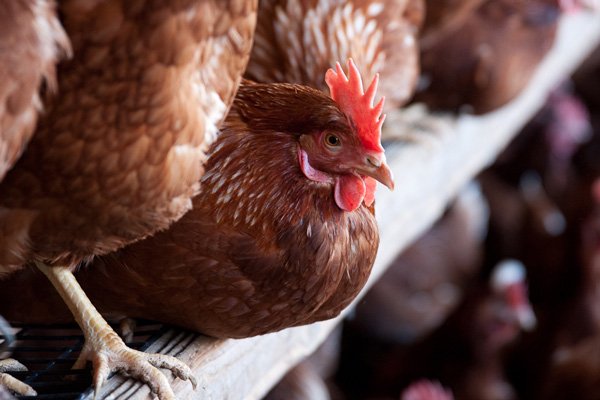
    Brown Rhode Island Red Chicken

    Sources: smithsonianmag.com, omlet.co.uk, wikipedia.org

  • DASH Rapid Egg Cooker Review

    DASH Rapid Egg Cooker Review

    There are a lot of intriguing egg gadgets on the market – from egg cookers and yolk separators to fancy omelet pans. We’ve decided to give some of these gadgets a try to see if they are worth the money. We’ll post our results here and on our social media pages, hoping to share some helpful insights. If you have gadget suggestions for us to review, send us a note.


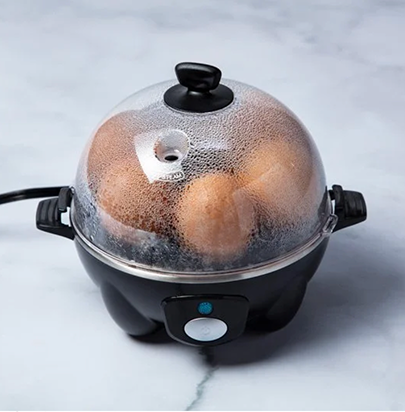
    DASH Rapid Egg Cooker

    4 out of 5 eggs rating

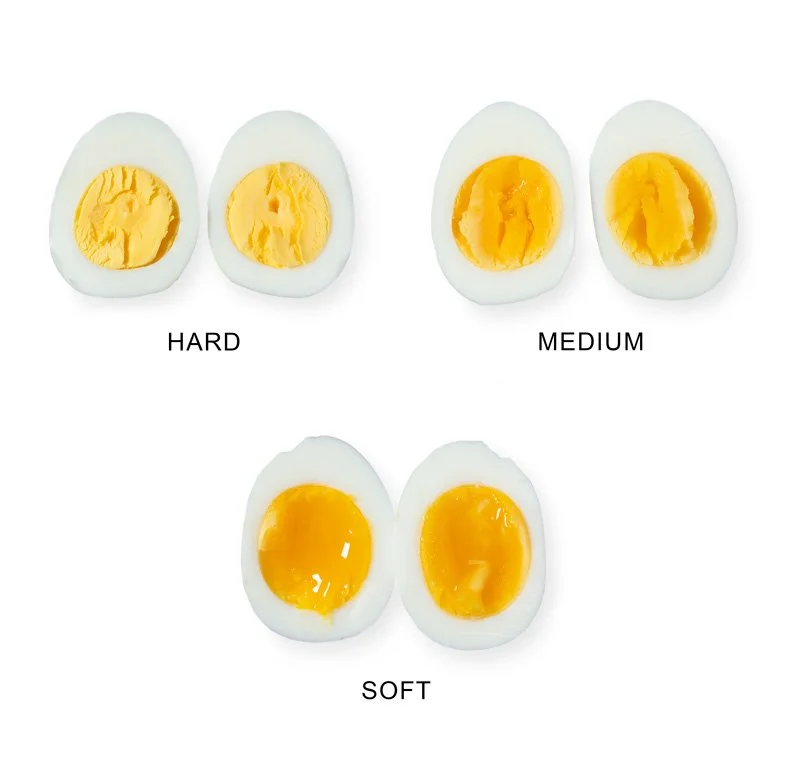
    We purchased the DASH Rapid Egg Cooker to give it a try. This cooker advertises the ability to prepare soft, medium and hard-boiled eggs, as well as make omelets, scrambled eggs, and even poached eggs.

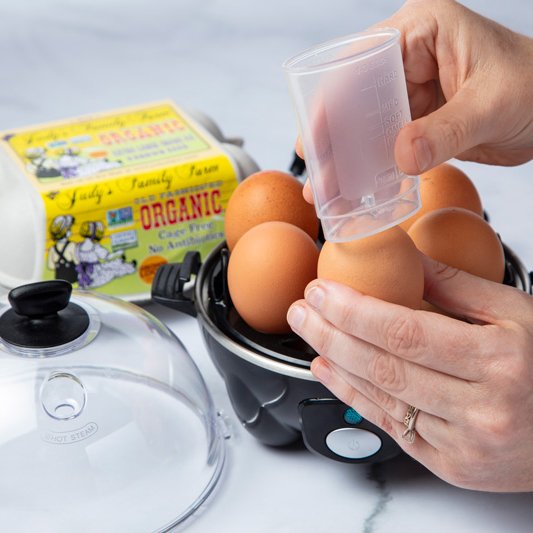
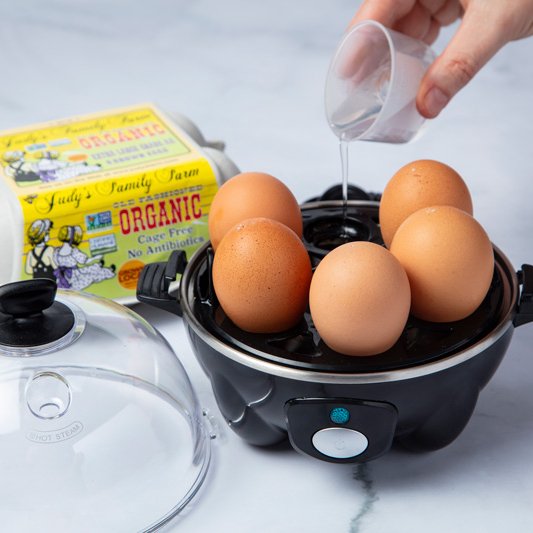
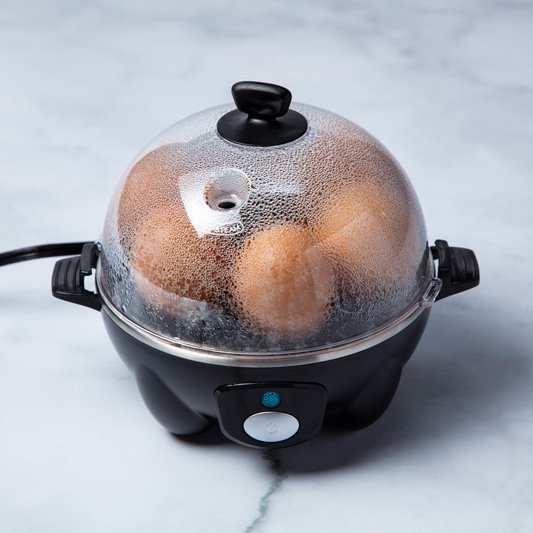
    Boiled Egg Process: You begin by piercing a small hole on the large end of each egg with a provided tool and then place eggs in the cooker. The length of time the eggs will cook depends on how much water you put in the base of the cooker. An easy-to-read measuring cup is provided that indicates just how much water is needed for the number of eggs and the level of hardness desired. You add the suggested amount of water to the bottom of the cooker, close the lid, and press the start button. This particular egg cooker chimes when the eggs are ready! It’s suggested that you then put the eggs into an ice bath (similar to stovetop methods) to stop the cooking process. We tried all three versions (soft, medium and hard-boiled) and have photos of the outcome below.

    Results: We found the boiled eggs very easy to peel, especially when peeled while still slightly warm. The suggested water levels were also right on the money. Cleanup was easy with just a little bit of residue left on the bottom of the cooker that wiped away with a sponge and bit of soap. All in all, we found this to be a great tool that is perfect for those who want to skip the stovetop but still achieve perfectly boiled eggs that are easy to peel!

    DASH egg cooker in use with two hands
    DASH egg cooker in use with one hand
    DASH egg cooker closed
    Perfectly boiled eggs result

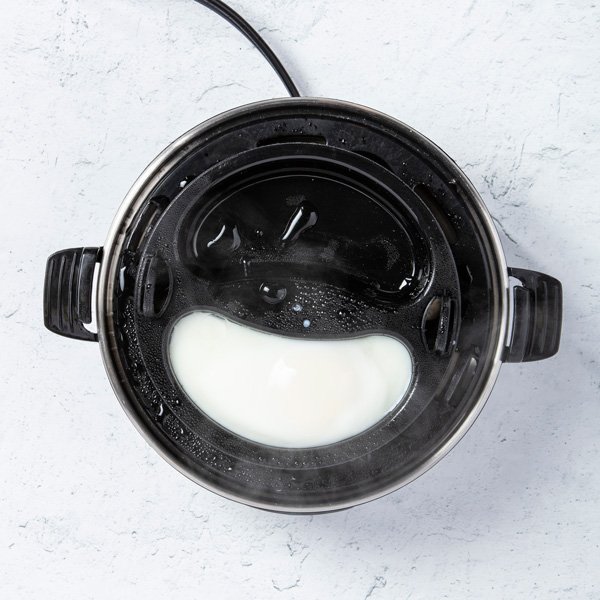
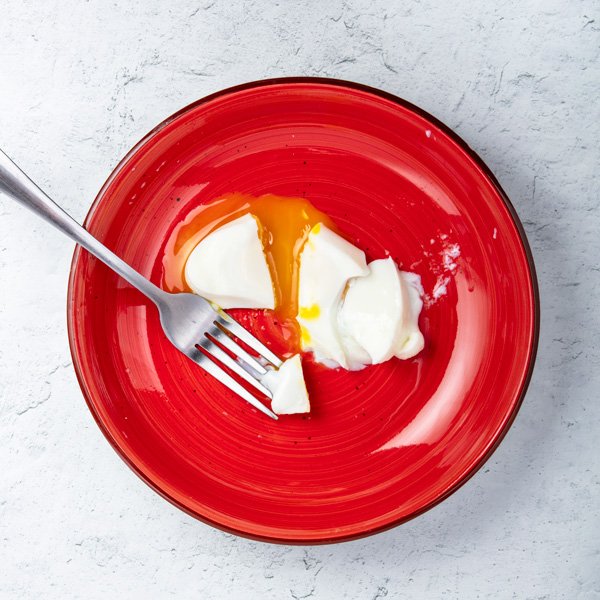
    Poached Results: The DASH Rapid Egg Cooker comes with a poached egg tray that we also tested out. You simply crack the egg into the provided tray and add the suggested amount of water. It does result in a slightly odd-shaped poached egg, but if that doesn’t bother you, it’s a very nice consistency and easy to do.

    Poaching egg in DASH cooker
    Poached egg result from DASH cooker
  • The Petaluma Egg Farm Difference

    The Petaluma Egg Farm Difference

    Petaluma Egg Farm Family

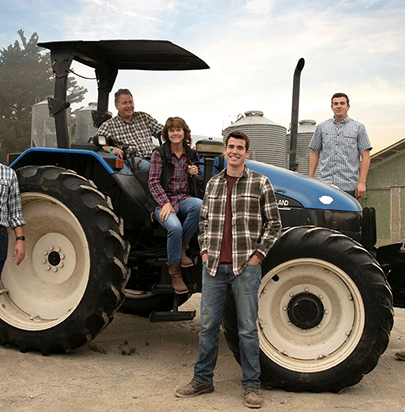
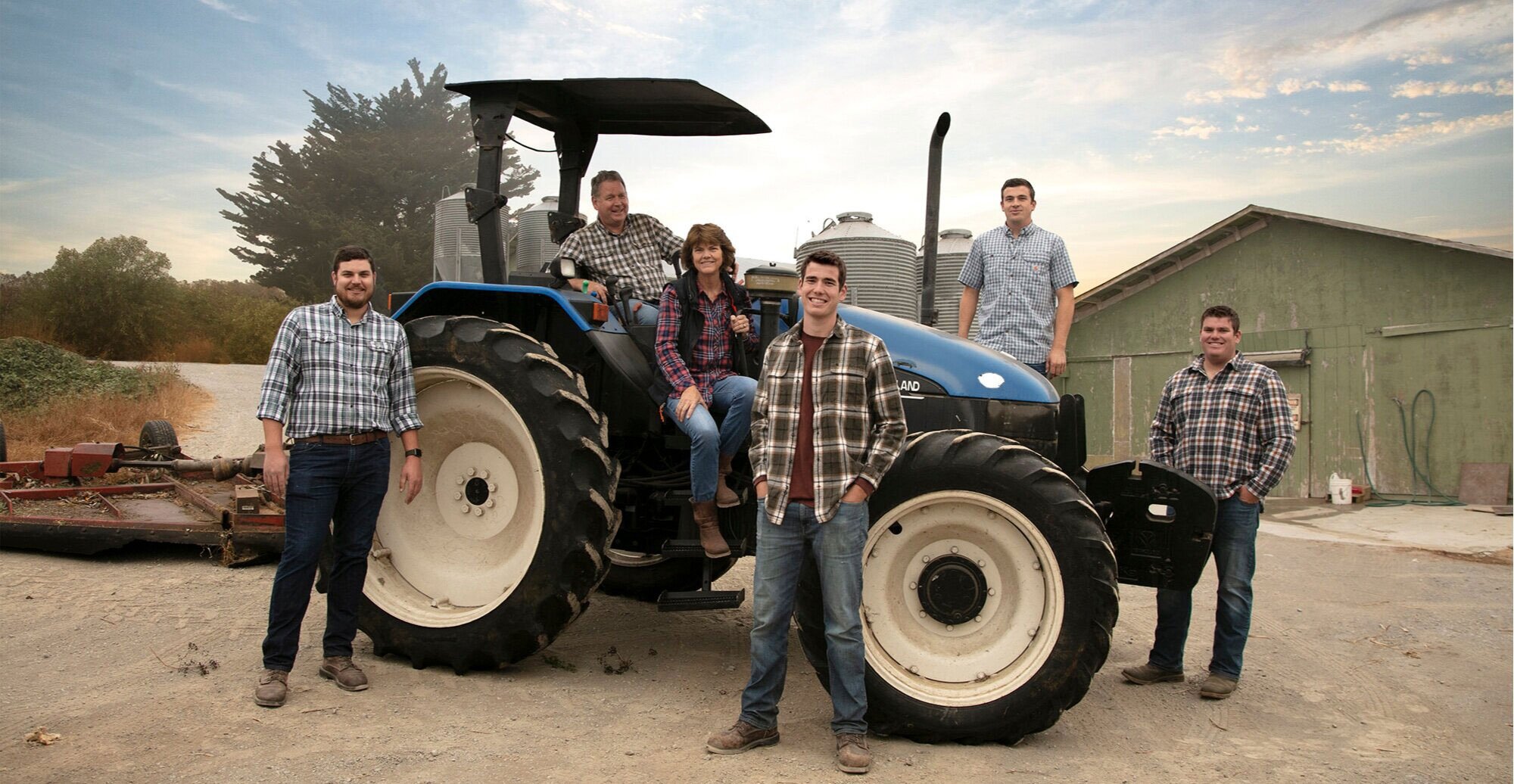
    Petaluma Egg Farm owners Steve and Judy Mahrt with their sons Jonathan, Justin, Jordan, Jeremy (left to right).
    Steve Mahrt

    Steve Mahrt started Petaluma Egg Farm in 1983.

    When you buy our eggs, you’re getting the family farm difference. We are the last independent, family-farmed egg available in Northern California grocery stores. When we get out of bed in the morning, we’re not putting on a suit and dress shoes to go into the office — we’re putting on jeans, a t-shirt, and a pair of boots to head out to check on the chickens. 365 days a year, before we do anything else, we’re taking care of our chickens. Growing up, my dad always told us that the chickens come first, and if we take good care of our chickens, then they will take good care of us…and that’s a daily mantra we still live by.

    Because we aren’t owned by a private equity group or have shareholders to please, we’re free to do things the Petaluma Egg Farm way, even when it goes against conventional wisdom or the bottom line. Our family has been independently farming for more than 100 years, so you can be sure that we won’t be changing any time soon.

    Jeremy Mahrt and his dog Ellie

    Jeremy Mahrt and his dog Ellie on their way to check out the chickens.


    We’re not just one of many family farms contracted to a massive public company — we’re one family with one farm, selling our eggs only in Northern California.

    For this reason, we like to call our eggs “single-sourced,” or if we were a fancy vineyard, we’d be “estate grown.” No matter which term you prefer, both mean that when you buy any of our brands, they only contain eggs raised by our family in Sonoma County. When you buy eggs from the “other guys,” it’s hard to know the origin of the eggs, but when you buy our eggs, you know exactly who and where they come from.

    This is all a part of our ongoing sustainability journey. We only sell eggs in our own backyard because we don’t want to ship eggs thousands of miles. We use solar to power our egg processing plant, and we’re looking at ways to use chicken manure for both power and compost. Instead of lawn mowers, we often use sheep and cows to help keep down the grass on our farm. These are just a few of the many ways we try to minimize our carbon footprint here on the farm.

    Sheep at Farm

    Sheep help minimize the farm’s carbon footprint by doing the work of many lawnmowers!
    Open sided barns

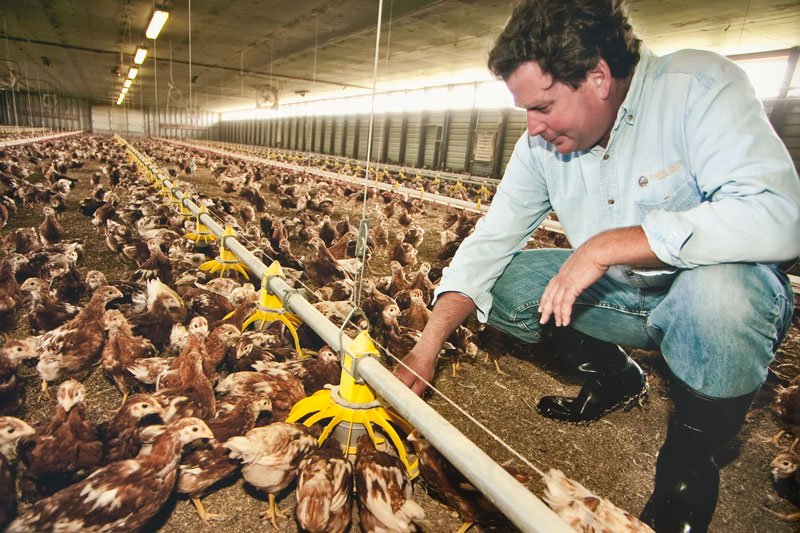
    Open sided barns are not the norm in chicken farming, but we feel it is important for our chickens’ health.

    Our dedication to providing the highest-quality eggs is evident in every step of our process. Did you know that most chickens are raised in barns with little access to fresh air or natural light, relying mostly on forced ventilation and artificial light? In contrast, because we live in such an ideal climate for chickens, our barns are open-sided and naturally ventilated so when the weather is nice, even while inside the chicken house, our hens have access to fresh air and sunshine. We also give our hens more space and plenty of opportunity to roam, socialize, preen, perch, and dust bathe as compared to industry standards. We ensure that they receive a nutritious diet, free of antibiotics, hormones, and animal by-products, which promotes the production of healthy and delicious eggs.

    Biosecurity laser

    This low power laser (like a laser pointer) helps scare away wild birds from the farm that might be carrying diseases.

    Additionally, our farm follows strict biosecurity measures to prevent disease and maintain the health of our hens. We also undergo regular inspections by both governmental and independent agencies to ensure that we meet or exceed all industry standards.

    Our family works hard every day to provide fresh, local eggs to those who care. If you already buy our eggs, thank you for supporting our family. If you haven’t yet tried them, please consider supporting your local farmers by giving our eggs a try.
  • Why Size Matters: Understanding Egg Grades and Sizes

    Why Size Matters: Understanding Egg Grades and Sizes

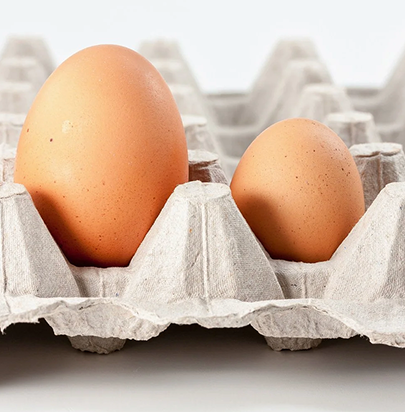
    Eggs in Carton

    Why Size Matters

    When you’re standing in the egg aisle at your local grocery store, the variety of egg sizes and grades can be overwhelming. You might wonder what these classifications mean and how they can affect your cooking experience. In this post, we’ll delve into the differences between egg sizes and grades and provide you with the information you need to make the best choice for your next egg-based dish.


    Egg Sizes: From Peewee to Jumbo

    Eggs are categorized into six different sizes based on their weight, ranging from peewee to jumbo. Here’s a quick breakdown of the different sizes and their respective weights according to the California Department of Food and Agriculture (CDFA):

    Egg Sizes Chart

    • Peewee: under 40.16 grams (1.41 ounces)
    • Small: 40.16–47.24 grams (1.41–1.66 ounces)
    • Medium: 47.25–54.33 grams (1.67–1.91 ounces)
    • Large: 54.34–61.41 grams (1.92–2.16 ounces)
    • Extra-Large: 61.42–68.50 grams (2.17–2.41 ounces)
    • Jumbo: over 68.51 grams (2.42 ounces)

    Generally recipes call for large eggs, which are the most commonly found size in grocery stores. However, if you have access to different egg sizes, keep in mind that the size will affect the overall volume and consistency of your dish.


    Egg Grades: AA, A, and B

    In the United States, eggs are graded based on the quality of the shell, the egg white (albumen), the yolk, and the presence of any defects. The U.S. Department of Agriculture (USDA) assigns one of three grades to eggs: AA, A, and B.

    Grade AA Eggs

    Grade AA

    These eggs have the highest quality, with firm, thick egg whites and round, well-centered yolks. The shells are clean and free of cracks. Grade AA eggs are ideal for dishes where appearance is important, such as poached or fried eggs. All Petaluma Egg Farm retail eggs are grade AA unless otherwise noted.

    • Shell: Clean, unbroken, practically normal
    • Air Cell: 1/8 inch or less in depth
    • White: Clear, firm
    • Yolk: Outline slightly defined. Practically free from defects

    Grade A Eggs

    Grade A

    These eggs have slightly thinner whites than Grade AA, but they still maintain good overall quality. Grade A eggs are suitable for most cooking purposes, including scrambling, baking, and hard-boiling.
    • Shell: Clean, unbroken, practically normal
    • Air Cell: 3/16 inch or less in depth
    • White: Clear, reasonably firm
    • Yolk: Outline fairly well defined. Practically free from defects

    Grade B Eggs

    Grade B

    These eggs have thinner whites and flatter yolks, and the shells may have slight stains or irregularities. Grade B eggs are often used in commercial food production or for making liquid, frozen, or dried egg products.


    Who Comes Up with These Standards?

    Our eggs are inspected by three different government agricultural agencies: county, state (CDFA), and federal (USDA). They conduct inspections on a regular basis on the farm as well as any place where eggs are sold.

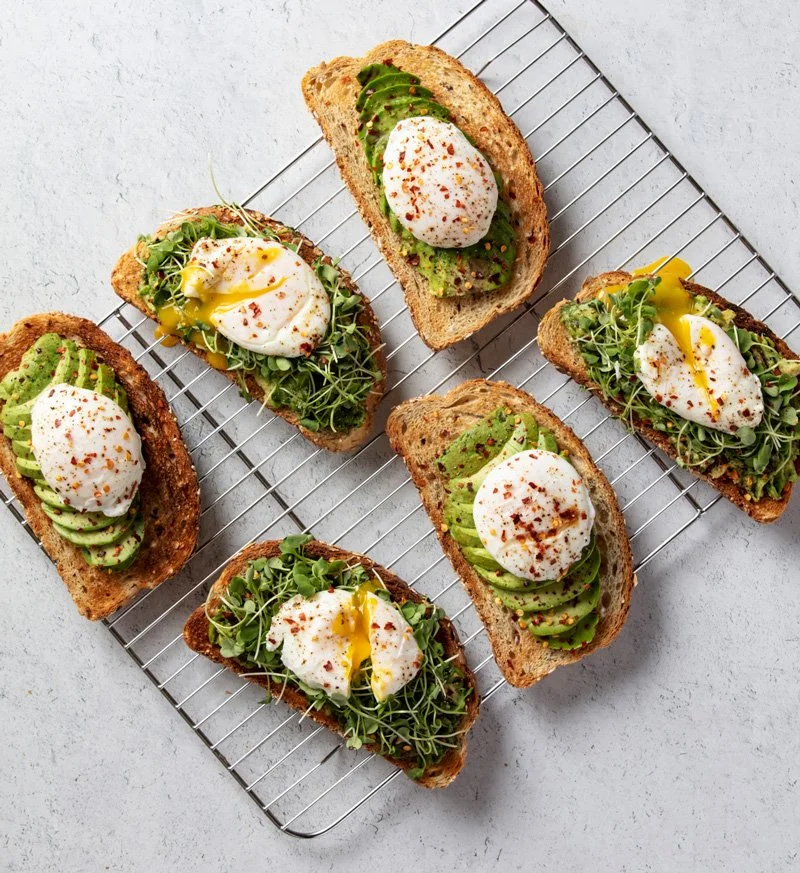
    Avocado Toast with Eggs

    Understanding egg sizes and grades can help you make informed decisions when purchasing eggs for your culinary creations. By choosing the right size and grade, you can ensure that your dishes turn out just as you intended. When in doubt, opt for large, Grade A or AA eggs for most home cooking needs. And remember, no matter the size or grade, farm-fresh eggs from your local egg farm will always be a delicious and nutritious choice.

  • The Cutest Chick in Town Contest 2023

    The Cutest Chick in Town Contest 2023

    2023 Cutest Chick Contest contestants

    Thank you to all the wonderful families who took the time to make costumes and dress up their children in amazing chick themed costumes. Every single one of the contestants looked great! We look forward to hosting this event every year as a part of the Butter and Egg Days Parade and it never disappoints.

    Contest contestants
    Contest contestants
    Contest contestants
    Contest contestants
    Contest contestants
    Contest contestants
    Contest contestants
    Contest contestants
    Contest contestants

    The Results

    1st Place: #29 – Annie Marie

    2nd Place: #13 – Makenna Winter

    3rd Place: #25 – Ella and Jamie Ridgeway

    1st place received a one year family membership to the Oakland Zoo and all contestants received gift bags for participating in the contest.

    We can’t wait to see you all again next year!