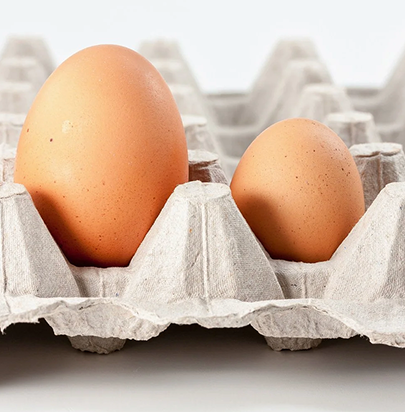

Why Size Matters
When you’re standing in the egg aisle at your local grocery store, the variety of egg sizes and grades can be overwhelming. You might wonder what these classifications mean and how they can affect your cooking experience. In this post, we’ll delve into the differences between egg sizes and grades and provide you with the information you need to make the best choice for your next egg-based dish.
Egg Sizes: From Peewee to Jumbo
Eggs are categorized into six different sizes based on their weight, ranging from peewee to jumbo. Here’s a quick breakdown of the different sizes and their respective weights according to the California Department of Food and Agriculture (CDFA):

- Peewee: under 40.16 grams (1.41 ounces)
- Small: 40.16–47.24 grams (1.41–1.66 ounces)
- Medium: 47.25–54.33 grams (1.67–1.91 ounces)
- Large: 54.34–61.41 grams (1.92–2.16 ounces)
- Extra-Large: 61.42–68.50 grams (2.17–2.41 ounces)
- Jumbo: over 68.51 grams (2.42 ounces)
Generally recipes call for large eggs, which are the most commonly found size in grocery stores. However, if you have access to different egg sizes, keep in mind that the size will affect the overall volume and consistency of your dish.
Egg Grades: AA, A, and B
In the United States, eggs are graded based on the quality of the shell, the egg white (albumen), the yolk, and the presence of any defects. The U.S. Department of Agriculture (USDA) assigns one of three grades to eggs: AA, A, and B.

Grade AA
These eggs have the highest quality, with firm, thick egg whites and round, well-centered yolks. The shells are clean and free of cracks. Grade AA eggs are ideal for dishes where appearance is important, such as poached or fried eggs. All Petaluma Egg Farm retail eggs are grade AA unless otherwise noted.
- Shell: Clean, unbroken, practically normal
- Air Cell: 1/8 inch or less in depth
- White: Clear, firm
- Yolk: Outline slightly defined. Practically free from defects

Grade A
These eggs have slightly thinner whites than Grade AA, but they still maintain good overall quality. Grade A eggs are suitable for most cooking purposes, including scrambling, baking, and hard-boiling.
- Shell: Clean, unbroken, practically normal
- Air Cell: 3/16 inch or less in depth
- White: Clear, reasonably firm
- Yolk: Outline fairly well defined. Practically free from defects

Grade B
These eggs have thinner whites and flatter yolks, and the shells may have slight stains or irregularities. Grade B eggs are often used in commercial food production or for making liquid, frozen, or dried egg products.
Who Comes Up with These Standards?
Our eggs are inspected by three different government agricultural agencies: county, state (CDFA), and federal (USDA). They conduct inspections on a regular basis on the farm as well as any place where eggs are sold.

Understanding egg sizes and grades can help you make informed decisions when purchasing eggs for your culinary creations. By choosing the right size and grade, you can ensure that your dishes turn out just as you intended. When in doubt, opt for large, Grade A or AA eggs for most home cooking needs. And remember, no matter the size or grade, farm-fresh eggs from your local egg farm will always be a delicious and nutritious choice.
Leave a Reply